theguardian.com
@theguardian Fri, 10 Jul 2026 06:00:13
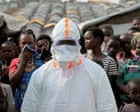
Visualised: how conflict, aid cuts and health-worker attacks are helping Ebola spread in DRC
The rapid spread of the virus has been intensified by misinformation and violence towards volunteers and treatment centresNearly two months after the Democratic Republic of the Congo (DRC) confirmed an Ebola outbreak in one province, the virus is continuing to spread rapidly, reaching more parts of the country and infecting more people.According to government data from 8 July, 1,759 cases and 600 deaths have been recorded. The virus has also spread to Uganda, where there have been 20 confirmed cases, including two deaths. Continue reading...
read moreOther Headlines
theguardian.com
@theguardian Sun, 04 Oct 2026 07:04:58
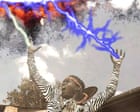
Wakaliga Uganda review – a blistering superhero movie with hardboiled cops and a nefarious 'girl with a voluminous bum'
Chisenhale Gallery, LondonA young man possessed by the spirit of a mythical Buganda warrior leads the film-making collective's explosive new diatribe against the theft of cultural artefacts – with the help of a 'video joker' Wakaliga Uganda makes action movies with a cast from the Kampala streets, props built out of scrap, desktop special effects and a bucketload of wit. The studio's breakout hit, Who Killed Captain Alex?, followed a martial arts master on a mission for revenge against the mafiosi who killed his brother, a Ugandan military officer sent to clean up the capital's slums. Featuring helicopter gunships, shootouts and kung fu showdowns, and reportedly made for a few hundred dollars, this blockbuster bears little relation to the films you might expect to find in an art gallery (setting aside the shoestring budgets). Which is to say, it is very good fun to watch.Founded by Harriet Nakasujja and Isaac Nabwana, the film studio also known as Wakaliwood came to the attention of the wider art world in 2017 when it was included in the German art festival Documenta. That influential show was part of a general turn towards the culture being made by independent collectives outside Europe and North America, especially those that pioneer unconventional ways to fund their activities (indicatively, the studio used the money to install fibre-optic cables in its neighbourhood). Its entry on to the international art circuit brought higher production value and – if the new commission now showing at the Chisenhale is any guide – a subtle shift in direction and purpose. Continue reading...
read moretheguardian.com
@theguardian Mon, 14 Sep 2026 15:03:41
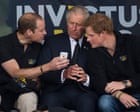
Uganda reverses Invictus Games withdrawal after reassurance from King Charles
Military chief had pulled country out over 'Harry-Meghan nonsense' but U-turned after clarification from the palaceUganda has U-turned on its decision to withdraw from the Duke of Sussex's Invictus Games after the country's military chief said he had been reassured by King Charles that there was "no problem" with its participation.Last week, Gen Muhoozi Kainerugaba, the eldest son of the Ugandan president, Yoweri Museveni, made the surprise announcement the country would not participate in the games in a post on X. He said he was motivated by his respect for the king amid division over the "Harry-Meghan nonsense". Continue reading...
read moretheguardian.com
@theguardian Sat, 12 Sep 2026 15:09:05
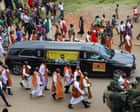
Burial of King Oyo takes place in Uganda as news anchor prepares for throne
Royal guards carry casket through streets of Fort Portal amid row over appointment of Edward Rukidi KijanangomaUganda's King Oyo Nyimba Kabamba Iguru Rukidi IV, long the world's youngest monarch, has been buried among the tombs of his royal forebears as his Tooro kingdom looked to put a bitter succession battle behind it.Oyo's appointed successor, the news anchor Edward Rukidi Kijanangoma, cast nine coffee berries into the grave at the Karambi Royal Tombs, marking the formal handover of power in the western Ugandan kingdom. Continue reading...
read moretheguardian.com
@theguardian Thu, 10 Sep 2026 15:53:29
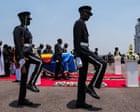
TV presenter v secret son: the succession dispute engulfing a Ugandan kingdom
Family of late King Oyo Nyimba Kabamba Iguru Rukidi IV reveal son's existence as they reject committee's choice of cousin as new monarchA traditional Ugandan kingdom has become engulfed in a bitter succession dispute after the family of a king who recently died rejected the selection of a television news anchor as his successor.King Oyo Nyimba Kabamba Iguru Rukidi IV, who became the world's youngest reigning monarch when he took the throne in the kingdom of Tooro in 1995 at the age of three, died on 27 August in the US, where he was receiving cancer treatment. Continue reading...
read moretheguardian.com
@theguardian Wed, 09 Sep 2026 17:51:59
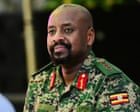
Uganda to withdraw from Invictus Games 'out of respect for King Charles', says military chief
Gen Muhoozi Kainerugaba announces decision to pull out of event in post on X, citing tensions over 'Harry-Meghan nonsense'Uganda is withdrawing from the Duke of Sussex's Invictus Games, the country's military chief said, out of respect for King Charles amid division over the "Harry-Meghan nonsense".Gen Muhoozi Kainerugaba, son of the Ugandan president, made the surprise announcement in a post on X on Wednesday. Continue reading...
read moretheguardian.com
@theguardian Wed, 26 Aug 2026 14:00:15
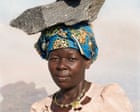
A Ugandan quarry worker carrying rocks on her head: Dan Nelken's best photograph
'Janet had eight children. Her husband drove a boda-boda taxi, but had lost a leg – so she had been working in her local quarry for 10 years. "I am now the husband in this home," she said'In 2017, my wife, Adele Brown, was invited to spend three weeks at an NGO in Gulu, Uganda, teaching critical thinking skills to blind high school-age students. I was asked along to document the organisation's activities. I became fascinated by the town's main market, where vendors sold goods such as used clothes, fruit and firewood. I asked the Ugandan teachers how I might approach someone to take their portrait. They suggested I offer a modest "model fee" after seeking permission.One of the students – Emmanuel (Emma) – wanted to assist me. We would visit the market together. When I saw a vendor I wanted to photograph, Emma would approach and seek their consent. Most agreed, but after returning home to New York, I looked at the results and was disappointed. As with other well-intentioned projects, I thought that was the end of it. Continue reading...
read moretheguardian.com
@theguardian Mon, 24 Aug 2026 11:54:08
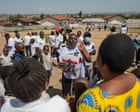
After 100 days of the deadliest Ebola outbreak, it can be stopped. Here's how | Jean Kaseya and Tedros Adhanom Ghebreyesus
Ebola is a disease that spreads through communities, so we need to listen to communities if we want to halt its spreadEach time we travel to the Democratic Republic of the Congo (DRC), we go first to listen. In Bunia, we have met dozens of community representatives: survivors, women, young people, local organisations, health workers and leaders from affected areas.Their message was direct: involve us. We know our communities. We know where families seek care, how information moves and why trust is breaking down. Give us the means to help drive the response. They were right. Continue reading...
read moretheguardian.com
@theguardian Fri, 21 Aug 2026 09:02:22
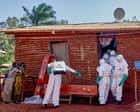
Ebola outbreak: five big questions
On 23 August, it will be 100 days since the Bundibugyo strain was first reported. How did it became the DRC's most deadly outbreak and what must be done to stop it becoming the world's largest?Almost 100 days ago, Africa's public health watchdog reported an outbreak of Ebola in the Democratic Republic of the Congo.There have now been almost 5,000 cases and more than 2,000 deaths since 15 May, making this Ebola outbreak the biggest and most deadly in the DRC's history. Continue reading...
read moretheguardian.com
@theguardian Wed, 19 Aug 2026 17:59:29
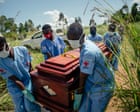
The Guardian view on the Ebola outbreak in the DRC: a case study in why international aid matters | Editorial
The Trump administration's 'America first' approach has contributed to the scale of the crisis now unfolding in one of the world's poorest countriesFor months health experts have warned that the scale of the Ebola outbreak in the Democratic Republic of the Congo (DRC) could surpass the one that swept west Africa in 2014-16. This week, the authorities in the DRC announced that a grim milestone has already been passed: at least 2,325 people have died from the virus, making it the deadliest of the country's 17outbreaks and the fastest-growing in history.There is no effective vaccine against Bundibugyo – a rare strain of the virus that spread fatally undetected during the spring, often being misdiagnosed as malaria or typhoid. In contrast to neighbouring Uganda, which succeeded in eliminating an outbreak, multiple factors are combining to let the disease rip through the DRC. The worst-affected region is contested by armed groups, and a context of population displacement and chronic insecurity has made monitoring and surveillance more difficult. Ebola treatment centres have been attacked as a result of misinformation and community distrust. Continue reading...
read moretheguardian.com
@theguardian Mon, 17 Aug 2026 12:53:16

What is Ebola and why is the outbreak in DRC causing so much concern?
Strain of virus with no vaccine has potential to overrun response impeded by conflict and misinformationHealth authorities in the Democratic Republic of the Congo are losing their battle to contain the country's deadliest Ebola outbreak.DRC's health ministry declared an outbreak in Ituri province on 15 May, though sequencing shows it had begun in February. It has since spread to five other provinces and is on track to overtake the 2014-16 west Africa outbreak as the largest in history. Continue reading...
read moretheguardian.com
@theguardian Thu, 06 Aug 2026 14:30:32
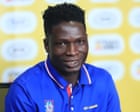
Top Ugandan footballer killed by robbers armed with paving stones
David Owori, who played for the national team, died in hospital after he tried to stop robbers taking his phoneThe Ugandan football community is in mourning after the death of a player who was fatally injured during a robbery in the capital, Kampala, on Tuesday night.David Owori, who captained Sports Club Villa, a Uganda Premier League club, and represented the national team, was attacked after resisting an attempt to steal his mobile phone and other belongings. Continue reading...
read moretheguardian.com
@theguardian Sun, 02 Aug 2026 04:00:11
Anti-LGBTQ+ laws are on the rise across west Africa, campaigners warn
Activists in the region say politicians regard LGBTQ+ people as 'the easiest scapegoats to maintain their power'A growing number of west African countries are implementing or strengthening anti-LGBTQ+ laws, amid local political pressures and a global pushback against LGBTQ+ rights.In March, Senegal doubled the maximum prison sentence for gay sex to 10 years and criminalised the "promotion" of homosexuality. Niger criminalised "sexual relations with a person of the same sex" in February, the first time same-sex intimacy had been outlawed in the country. Continue reading...
read moretheguardian.com
@theguardian Mon, 27 Jul 2026 07:00:34
Uganda begins emergency food handouts after 19 die from hunger
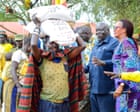
Government move follows months of drought and crop failures in Karamoja, with 1.5m people facing malnutritionUganda has launched emergency food relief distribution after at least 19 deaths from hunger were reported in an area of prolonged drought in the east of the country.A crisis has been building in the Karamoja region of Uganda as crops have failed without the season's expected rains, leaving the region's 1.5 million people facing acute food shortages and rising malnutrition. Continue reading...
read moretheguardian.com
@theguardian Fri, 24 Jul 2026 10:00:11
'We can't even walk through the streets': women arrrested for kissing in public on life under Uganda's anti-LGBTQ+ law
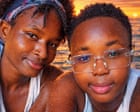
Wendy Faith and Alesi Diana Denise have been released after five months in prison over allegations of engaging in same-sex activityFor five months, Wendy Faith and Alesi Diana Denise shared a small prison cell knowing that there was a possibility they might spend the rest of their lives there. Accused of engaging in same-sex activity, an offence under Uganda's anti-LGBTQ+ laws, the two young women faced a life sentence.Faith, a 22-year-old musician known as Torrero Bae, and Denise, 21, say they have been left "traumatised" by their arrest and detention, an ordeal that began with a police raid on their single rented room in Arua City, north-west Uganda, in February. Continue reading...
read moretheguardian.com
@theguardian Thu, 16 Jul 2026 11:33:27
Uganda calls for travel restrictions to be lifted after last Ebola patient discharged
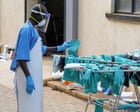
Country begins 42-day countdown to outbreak being declared officially over, as numbers continue to rise in neighbouring Democratic Republic of the CongoUganda has started lobbying countries to lift Ebola-related travel restrictions after discharging its last confirmed Ebola patient from hospital.The discharge of a Congolese national from the Mulago national referral hospital's isolation centre in Kampala on Thursday triggered the start of a 42-day countdown required by the World Health Organization before Uganda can officially be declared Ebola-free, provided no new infections are detected. Continue reading...
read moreRight Column Content