kfm.co.ug
@kfm Wed, 04 Oct 2023 04:52:02
Govt asked to support schools, health centres affected by rains in Mityana
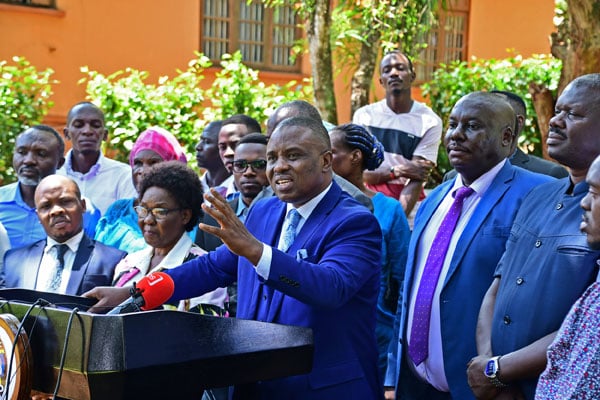
The shadow minister for information and anti-corruption, who also doubles as the Mityana Woman Member of Parliament, Ms. Joyce Bagala has asked Parliament to compel the Office of the Prime Minister (OPM) to swing in with relief items and other forms of support to schools, health centres and residents of Nakibanga ward in Mityana district that were hit by disaster. She revealed that the aforementioned facilities were government-aided schools, and health centers, adding that a number residents were affected by heavy downpours that struck the area. She went on to reveal this had therefore impeded learners from attending school, something that required action from government. “There are also other 85 houses that were brought down by the heavy rains and […]
read morekfm.co.ug
@kfm Wed, 04 Oct 2023 05:06:09
All set as Mumbere returns to Kasese
By Daily Monitor Rwenzururu King Charles Wesley Mumbere today returns to Kasese District, the seat of his kingdom, after nearly seven years away. The Omusinga (king) was barred from accessing his kingdom as part of his bail conditions after he was charged with treason, murder, attempted murder and other charges.This followed his arrest and detention during the raid by joint security forces on his palace in November 2016. But with the charges dropped, the king is now free to return to his kingdom, something that has excited his subjects. The chairperson of the committee organising the king’s homecoming, Dr Nathaniel Mumbere Walemba, yesterday said they are ready to receive the Omusinga. Some of the king’s subjects yesterday began gathering in […]
read more


observer.ug
@observer Tue, 03 Oct 2023 21:55:14
Documents reduced to ashes as fire guts Interpol offices in Namisindwa

Fire has gutted International Police (Interpol) offices at the Uganda-Kenya border in Lwakhakha town council in Namisindwa district.
The fire broke out Tuesday afternoon, reducing all crucial documents and files to ashes. Bonny Wekesa, an eyewitness, says that residents rushed with jerry cans filled with water to extinguish the flames that had already destroyed all the files.
He explained that since the police fire tender truck was stationed in Mbale town, it took over three hours for it to arrive, by which time the locals had already managed to put out the fire.
Namisindwa deputy resident district commissioner Julie Namara confirmed the fire outbreak, saying that preliminary investigations suggest the fire may have been caused by an electric short circuit. She, however, says that further investigations are underway to determine the exact cause of the fire.
{loadposition inarticle}
read moreobserver.ug
@observer Wed, 04 Oct 2023 02:54:45
Uganda Airlines launches direct flight route from Entebbe to Mumbai

Uganda Airlines will this Saturday start direct flights between Entebbe and Mumbai, India.
This game-changing announcement was revealed during the Uganda-India Business Forum, which was co-hosted by Uganda Airlines and the United Nations Development Programme on September 29 at the Kampala Serena hotel.
Notably, the event was attended by the CEO of Uganda Airlines, Jennifer Bamuturaki, Elsie Attafauh, the resident representative of UNDP in Uganda, Gen Katumba Wamala, the minister of Works and Transport, Odrek Rwabwogo, the presidential adviser on Special Duties and the Indian high commissioner to Uganda, Upender Singh Rawat.
Jennifer Bamuturaki said Uganda Airlines is excited to start this operation to Mumbai, the gateway to India, and this will be the 12th direct route and the second international flight.
“This is important because of the anticipated traffic that will accrue for the airline,” Bamuturaki added.
“This is our first Asian connectivity point that is poised to bring immense opportunities to Uganda while also cementing bilateral relations that we have enjoyed for centuries,” Gen Katumba said.
Gen Katumba also congratulated the Indian community on attaining a direct flight route after 40 years. He added that the new step will facilitate unification with families and ease of doing business.
“This is our first Asian connectivity point that is poised to bring immense opportunities to Uganda while also cementing bilateral relations that we have enjoyed for centuries,” he asserted.
“The schedule of the Entebbe-Mumbai flight will be three times a week: Monday, Wednesday, and Saturday. Therefore, it will be dinner in Entebbe and breakfast in Mumbai,” Bamuturaki said at the Uganda- India Business Forum.
Gen Katumba also said the airport is expanding to handle the increased volume of passengers that will be arriving, and the connectivity that has emerged through Entebbe has made it a strategic hub for travellers to and from Africa.
On his part, Rwabwogo, also the head of the Presidential Advisory Committee on Exports and Industrial Development (PACEID), said this new route from Entebbe to Mumbai is going to help in the promotion of the tourism industry in Uganda, which in turn will strengthen the economy and enable young people to venture into business.
Meanwhile, Rawat expressed his appreciation to Uganda Airlines and UNDP Uganda for the organisation of the Uganda- India Business Forum and the launch of the new Entebbe-Mumbai route.
{loadposition inarticle}
read moreobserver.ug
@observer Wed, 04 Oct 2023 03:12:34
Buganda Land Board dedicates October to sensitization program

Residents on Buganda kingdom land have welcomed the initiative by Buganda Land Board (BLB) of inviting all tenants to come and ensure that their land-registration documents are in order.
Dubbed the Client Interface Month, the initiative is aimed at harmonizing bibanja and lease ownership on Buganda kingdom land. According to Geoffrey Muddu, a resident of Nabweru in Nansana, this is a timely initiative especially when some people have resurrected the idea of abolishing mailo land.
“I think the Kabaka is the only landlord in Uganda who openly invites tenants to try to know them. In a country where there are many uncertainties concerning land, I think everyone with a kibanja on Buganda land should take advantage of this initiative,” Muddu said at BLB offices at Nakkuule in Nansana.
“I have a kibanja, I registered it with Buganda Land Board and I pay busuulu every year. That is what every responsible person should do.”
According to Olivia Cox Namaganda, the program coordinator, the month-long exercise is meant to strengthen the relationship between the Kabaka and tenants on Buganda kingdom land.
“We are inviting people to come and see if their kibanja is registered with us. If it is not registered, then we will register them. We have a wide range of professionals such as surveyors, lawyers, physical planners, land valuers, etc who will be available to answer any queries,” she said.
Namaganda says that many people have bibanja on Kabaka’s land but are not sure of the acreage or value of this land.
“We also have some people on our database who registered their bibanja but were not able to present some important documents such as the national ID number which is now a requirement for any transaction to happen. They should all come,” she said.
The initiative is starting with Kampala and Wakiso areas and people can access services at BLB branches such as the one found in Katwe Muganzirwazza, Ndejje-Lufuka, Nansana-Nakkuule, Kasangati, Masuuliita and Kakiri. Meanwhile, Jane Nakandi, a resident of Kasangati, was more upbeat about the decentralization of issuance of land electronic cards.
The land electronic card is an equivalent to an ATM where all land documents are stored and the only access to this card is through the fingerprints of the registered owner. Previously, these cards were being issued at the BLB headquarters in Mengo but during this interface, cards are going to be issued at branch level.
Recently, the Land division of the High court ruled that any transaction that happens on a kibanja without the consent of the landlord is void and perpetrators face a four-year jail time or a fine of Shs 1.92m or both.
But Namaganda says the Kabaka of Buganda is a very accommodative landlord who comes up with different avenues where tenants can comfortably meet their obligations.
“Buganda Land Board has nine branches and seven service centres across the kingdom that are open every day. This presents an opportunity for people on Kabaka’s land to seek our services and secure their tenancy,” she said.
{loadposition inarticle}
read moreobserver.ug
@observer Wed, 04 Oct 2023 03:22:54
Uganda to launch multi-functional 3-wheeler vehicle for rural development

Farmers and rural households in Uganda are poised to benefit from a new three-wheeler vehicle named Bingwa, designed to transport goods, pump water, and generate electricity.
President Yoweri Museveni will officially launch the vehicle on October 9 during Uganda’s 61st Independence day celebrations in Kitgum district.
PRODUCT ORIGINS
Created by a team of self-trained innovators led by Rogers Mubiru of Kevoton Motions Engineering Ltd., Bingwa was constructed at the Kiira Motors Vehicle Plant in Jinja.
Its engine casting was completed at the John Lugendo Foundry in Kampala. Powered by a fuel-efficient 0.8-liter two-stroke engine, Bingwa boasts a higher power-to-weight ratio compared to traditional four-stroke engines.
FEATURES AND CAPABILITIES
Dr Monica Musenero, the minister of Science, Technology and Innovation (STI), revealed Bingwa’s impressive capabilities during a flag-off ceremony at the Kiira Motors Plant.
The trike can transport up to 1,000kg of goods, pump 6,000 liters of water per hour, and generate 6 kW of electricity every hour. These features address urgent challenges faced by farmers and rural households in Uganda.
FINANCIAL SUPPORT AND INCUBATION
The STI Secretariat, under the Office of the President, funded Kevoton Motions through the National Research and Innovation Program. This grant enabled the domestic manufacture of Bingwa. Kiira Motors provided incubation support to bring the idea to fruition.
MEETING RURAL NEEDS
The vehicle is tailored to meet the pressing challenges of Uganda’s rural population—80% of whom are involved in agriculture.
Despite this, only a small percentage have access to irrigation and electricity. Dr Musenero emphasized the transformative potential of Bingwa in boosting agricultural productivity and improving rural living conditions.
FUTURE PROSPECTS
“We hope to see the deployment of 600 units across various sub-counties to improve household livelihoods,” said Rogers Mubiru, the founder and director at Kevoton Motions Engineering Ltd.
VALIDATION OF INCUBATION MODEL
Allan Muhumuza, Mobility Team Leader at the STI Secretariat, said the project’s success validates an incubation model where budding innovators are mentored by established enterprises like Kiira Motors.
LOCAL MANUFACTURING
Albert Akovuku, the director of Production at Kiira Motors, noted that 55% of Bingwa’s components are locally made, thereby supporting Uganda’s push for localization and value addition in manufacturing.
PROJECT FUNDING
The Uganda Development Bank (UDB) has allocated US$ 250,000 to facilitate project planning and production readiness.
COST AND MARKET POTENTIAL
Priced at Shs 28 million, Bingwa offers more utility than purchasing a separate tuk-tuk, water pump, and power generator. With an estimated market of 100,000 units in the medium term, Bingwa promises to contribute significantly to Uganda’s economic development.
{loadposition inarticle}
read moreobserver.ug
@observer Wed, 04 Oct 2023 03:32:41
Fuel climbs to Shs 5400 per litre

Fuel prices in Uganda have reached an all-time high, with petrol now priced at Shs 5,400 per liter and diesel at Shs 4,800 per liter.
This comes on the heels of a recent government statement issued on September 5, 2023, in which state minister of Energy and Mineral Development, Sidronius Okassai, stated that the government would not intervene in fuel pricing. The minister attributed the soaring costs to external factors.
Minister Okassai elaborated, “The surge is driven by global factors beyond Uganda’s control, limiting what the ministry of Energy can do. Increased global oil demand, particularly during the summer months in Europe and the United States, has significantly impacted oil prices. Economic activity and seasonal trends have also contributed to the worldwide rise in fuel costs.”
On Monday morning, major petrol stations such as Shell Mulago listed petrol at Shs 5,400 per liter, while local stations like City Oil Kamwokya priced it at Shs 5,530 per liter. Diesel was available for Shs 4,800 per liter.
The sharp rise in Uganda’s fuel prices has been further aggravated by fluctuations in the exchange rate. The USA dollar is now trading at Shs 3,770, up from Shs 3,719 on September 1, 2023, impacting fuel prices.
Additionally, the OPEC+ cartel’s decision to cut oil production by three million barrels per day, aimed at stabilizing and increasing oil prices, has influenced the market. As a result, Brent crude oil prices have reached $92 per barrel, with OPEC members pricing it at $96.62 per barrel.
This is a notable increase from the 2020 benchmark oil price of $68 per barrel. OPEC has extended its production cut until 2024 due to unfavorable market conditions.
The ongoing Russia-Ukraine conflict has also contributed to the price surge. Russia’s reduction in Urals crude production, a retaliatory measure against Western-imposed oil price caps, has further tightened the global oil supply, thereby increasing Russia’s oil revenues.
When reached for comment, neither the public relations officer of Total Energies nor the ministry of Energy and Mineral Development provided a response regarding the elevated fuel prices.
Uganda operates a liberal economy, and the government does not have direct control over fuel market prices, which are dictated by supply and demand. Currently, Uganda imports its fuel from Kenya, reported to be the most expensive source in the East African region.
{loadposition inarticle}
read moreobserver.ug
@observer Wed, 04 Oct 2023 04:15:34
The silent partners: How TotalEnergies keeps Uganda out of its inner circle

Most former French colonies are up in flames, and it is no coincidence. They are at the precipice of becoming failed states.
With Niger, Gabon and Burkina Faso in turmoil, and the Democratic Republic of the Congo [DRC] fragile, the civil unrest in Cote d’Ivoire’s recent past; and Rwanda’s once bloody times, it raises questions as to why France leaves bloody footprints wherever it sets foot.
This prompted a fact-finding attempt into France’s biggest, and the world’s sixth largest energy company by market valuation — TotalEnergies, which also goes by TotalEnergies Company, and TotalEnergies SE.
Because of the vested interest(s) the energy company has in Uganda’s aborn- ing oil industry, it is imperative that due diligence is conducted to see to it that Uganda’s interests are protected from France’s imperial appetite because when left unchecked, they [France] gluttonously eat even the crumbs that fall under the table.
For context France bought Canada’s uranium at €200 [Shs 789,000] per kilogramme as they simultaneously undercut Niger by paying a pitiable €0.80 [Shs 3,155] for each kilogramme of their uranium. Created over a century ago in Brussels, Belgium, TotalEnergies is valued at $158.63 billion [over Shs 593.4 trillion] on the New York Stock Exchange and €146.24 billion [over Shs 578.4 trillion] on the Euronext as of 1 October 2023 with total assets worth $303.8 billion, according to their 2022 financial statements.
The company registered a comprehensive income of $21.044 billion [Shs 78.7 trillion] in 2022 which is more than Uganda’s national budget for the financial year 2023/24 by $7 billion. The French oil giant operates projects in Africa, Asia, Europe, the Americas, and Australia.
In Africa, TotalEnergies has over 65 projects, in 14 countries. In Uganda, the company is a partner with a 56.67 per cent stake with oil resources in three blocks [it acquired from Tullow oil in 2020], and a 62 per cent share in the East African Crude Oil Pipeline [EACOP] that will run from Uganda to Tanzania. That said, the company’s craftiness is hidden in its policies specifically:
EMPLOYMENT POLICY
Despite the company having a workforce of 101,279 employees as of its annual report released on 24 March 2023, only 10.4 per cent of that workforce is African. The biggest share of the staff is understandably European [63.3 percent] because that is where the oil company runs its biggest operations.
Regardless, 34.5 per cent of its European personnel are from France even when the French company only runs one natural gas reservoir in France at Lacq. Expectedly, TotalEnergies’ top management mainly comprises French, Dutch, Australian and Canadian nationals. There’s no African/non-white representation on the oil company’s board.
Latin America gets a bigger share of the jobs at 13.1 per cent even after the oil company relinquished its assets in Venezuela, and it [Latin America] pales in comparison to Africa in the production of liquids, and natural gas. This is especially concerning because TotalEnergies’ operations are broader in Africa, yet less Africans are employed, meaning that a big number of the oil giant’s jobs in Africa are taken by foreigners.
INVESTMENT POLICY
Black Rock Inc. a reputable financial advisory services company, is the biggest shareholder in TotalEnergies with 6.8 per cent share capital, and six per cent voting rights. The company’s report conveniently doesn’t state the share senior management in Africa gets, if any, and the percentage of voting rights they carry.
It, therefore, doesn’t come as a surprise that Africans are excluded from the shareholder structure of the oil giant with France taking the lion’s share of 26.4 per cent, United Kingdom [UK] 12.5 per cent, Rest of Europe 18.8 per cent, and North America 36.5 per cent.
Further, it is TotalEnergies’ policy that “members of the company’s general management and investor relations regularly meet with institutional investors and financial analysts...”
It is appalling that the energy company hasn’t seen the need to meet with institutional investors in Uganda like National Social Security Fund [NSSF] to give the fund an investment opportunity to cash in on dividends in the energy sector; neither has it met with local financial analysts to expose them to investment opportunities in the global energy sector through TotalEnergies.
As is, the oil giant is comfortable dishing out jobs to a handful of Ugandans, and parting with small amounts in license fees to the government: TotalEnergies SE paid $1,615,000 [over Shs 6 billion] in license fees in 2022.
RESEARCH AND DEVELOPMENT
“To prepare for the future, the company has allocated more than $1 billion [Shs 3.7 trillion] in funding for R&D and digitalisation in 2022,” TotalEnergies’ universal registration document released in March 2023 states.
This amount doesn’t consider the $2.5 billion [Shs 9.3 trillion] TotalEnergies has invested in research the last three years. Sadly, none of the said funding is going to make its way to Africa, or Uganda; neither will the 3,500 jobs that come with it; because none of the company’s 18 R&D centres are located in Africa.
The oil giant has got nine research centres sprawled across France much as it only has one natural gas reservoir there at Lacq. The rest are divided among Qatar [1], India [1], Norway [1], USA [5], and Brazil [1]. The presence of R&D centres on the African continent would groom talent, boost start-ups, and kick-start numerous pilot studies in vital areas like greenhouse gas emissions, alternative energy, and waste management seeing as carbon emissions in Africa are highest because the oil company is heavily operational in South Africa, Algeria, Nigeria, Egypt, Libya and Angola.
TOXIC EMISSIONS
In the climate section of TotalEnergies’ 2022 report, greenhouse/direct gas emissions are second highest in Africa, only coming second to Europe. Methane emissions have been the highest in Africa between 2015 and 2022.
Methane degrades air quality, and negatively impacts human health while being responsible for 30 per cent of the rise in global temperatures.
The oil giant’s universal registration document for 2022 places nitrogen oxides [Nox] emissions at 60 kilotons [kt]; one kiloton is equivalent to 1,000 tonnes. Nox triggers respiratory conditions, heart disease, diabetes, birth outcomes; and it can change soil chemistry affecting biodiversity.
TotalEnergies is responsible for the high number of spills with no volumes recovered in many cases. For instance, in 2018 there were 74 liquid hydrocarbon spills, with no volumes recovered, 2019 57 spills with no volumes recovered; and 2020 saw 50 spills and no volumes recovered.
This is coupled with the vast amounts of hazardous waste — 165 kt [2021], and 176 kt [2022] emitted into the environment, the African continent is a chemical waste-yard. And this is because it is TotalEnergies’ second biggest operation hub, second to Europe.
For good measure, the anticipated EACOP project, when completed, will emit more than 379 million tonnes in CO2 emissions during its lifespan, reports the Climate Accountability Institute.
“This exceeds France’s emissions in 2020...” the US research organisation’s press release warns.
What’s more, the construction of the company’s central processing unit in Buliisa district, Uganda has literally raised a lot of dust that the death of locals’ livestock has been catalyzed. Likewise, the massive land excavations have caused extensive flooding, and loss of locals’ crops for which they don’t get compensated.
When I brought these qualms to the attention of TotalEnergies through their corporate affairs manager in Uganda Anita Kayongo, she left me no response after giving me the assurance that a timely reply was slated fast and soon. Her unresponsiveness plays into the tight-lipped stereotype of the oil and gas industry in general.
In fairness to TotalEnergies, their presence hasn’t entirely spelt doom and gloom because their residence in Uganda is a stamp of approval that Uganda is investment-worthy. They have endured worldwide chastisement for investing in EACOP and have committed to spend between $10 billion and $20 billion in the local market. In doing so, many local companies are already enjoying the benefits.
For instance, construction companies which are building houses for the displaced, companies that are supplying food, and oil waste treatment companies that have placed in their proposals to cash in the oil adventure. It is obvious that without TotalEner- gies, there are no smoothed roads in Buliisa.
In Uganda, however, TotalEnergies has taken on the persona of the untouchable company because of the amplified allegations of forceful land grabbings and evictions brought against it in the areas surrounding TotalEnergies’ Tilenga project.
Not counting scores of compensation claims for land going as far back as six years. Death threats, and close-fatal encounters for those who have dared speak up against the company’s abrasive practices. An ongoing lawsuit filed by 26 Ugandans in France is testament to the French oil giant’s callousness to Ugandans, and Africans in general.
{loadposition inarticle}
read moreobserver.ug
@observer Wed, 04 Oct 2023 04:40:48
Lwera under siege: Sand miners, rice farmers fuel environmental collapse

Located just 20 kilometers from Mpigi to Kalungu district in Central Uganda, the Lwera stretch along the Kampala-Masaka highway was once a haven of natural beauty and ecological importance.
However, this once-vibrant eco-system now faces severe degradation due to relentless exploitation by sand miners and large-scale Chinese rice growers, leading to environmental and climate disruptions. The highway, previously a symbol of seamless connectivity and a main gateway to Tanzania, Burundi, Rwanda, and the Democratic Republic of the Congo (DRC), is now marred by the scars of exploitation.
The road is fractured, its surface pock-marked with chasms and craters that complicate travel. In this area, sand miners operate with audacious impunity. Using sophisticated dredgers that are formidable in both strength and reach, they descend upon the wetland, extracting the earth beneath the asphalt and undermining the road’s foundation.
These machines can harvest sand from astonishing distances, leaving behind compromised infrastructure. The Observer conducted an investigation into the dangerous human activities threatening the wetland with extinction and risking an environmental catastrophe for Uganda.
Our inquiries revealed an intricate web of conspiracy, widespread fraud, corruption, and impunity, allegedly orchestrated by high-ranking government officials. Current laws permit the National Environment Management Authority (Nema) to authorize ecologically friendly activities.
This has attracted various investors, including companies and individuals, who engage in activities such as sand mining, fish farming, and crop cultivation. Consequently, Nema has issued renewable certificates to several companies for operation within the wetland.
Although the regulator officially recognizes only three sanctioned operators, our investigations disclosed the presence of more, including Ark Uganda Limited (owned by Pastor Samuel Kakande), Freedom Multi Company, Zhong Industries Ltd, Double Q Co. Ltd, Seroma Ltd, Parkson Hongkong Investments, and others.
Environmentalists have expressed concerns about the ecological impact of sand mining and rice cultivation in the wetland. Additionally, some of the land within the stretch falls under Mailo land tenure, with individuals like John Ssebalamu holding valid titles. Our investigation found that some government officials have conspired to sell portions of the wetland.
Specifically, a 2017 investigation by the Lands Commission, led by Justice Catherine Bamugemeire, revealed that one of the titles, covering a square mile of the wetland in Lwera, was sold by then minister of Agriculture Vincent Bamulangaki Ssempijja to John Ssebalamu. Ssebalamu told the commission that he had purchased two square miles of wetland in 2010, one each in Mpigi and Kalungu, from the late Mayanja Nkangi, former chairman of the Uganda Land Commission (ULC), and Ssempijja, respectively.
Matia Lwanga Bwanika, the LCV chairperson for Wakiso district and a renowned environmental conservationist, emphasized this in an interview. He noted that in 2010, the Lwera area fell under Greater Masaka, as the Kalungu district had not yet been established. Bwanika explained that Ssempijja, who served as the LCV chairman for Masaka at the time, collaborated with the late Mayanja Nkangi of the Uganda Land Commission (ULC) to issue numerous land titles within the wetland, which they later sold to various individuals.
“During Mayanja Nkangi’s tenure, the Uganda Land Commission, given the expansive nature of Greater Masaka, oversaw the allocation of that entire area. Ssempijja and Nkangi made titles within the Lwera wetland and then sold them,” Bwanika confirmed.
DANGERS OF ENCROACHMENT ON LWERA WETLAND
The encroachment not only weakens the resilience of the wetland but also exacerbates climate change scenarios such as flooding. This is due to the mass felling of wetland cover and the destruction of a natural habitat vital for numerous bird species. The impact further extends to negatively affecting tourism as Lwera wetland’s attractiveness wanes.
Achilles Byaruhanga, the executive director for Nature Uganda and recipient of the Prince William Award for Conservation in Africa, concurred. He highlighted that the degradation of the wetland negatively impacts the local climate and poses a significant threat to Uganda’s tourism industry.
“You can’t promote tourism in Lwera wetland when the very elements that attract tourists are being destroyed,” Byaruhanga argued.
We spoke to a bird deterrent specialist, known only as Herman, from Zhong Industries Ltd, a Chinese-owned rice cultivation enterprise operating near Lukaya town council. He admitted that the chemicals used a few years ago to eliminate weeds and pests in rice plantations inadvertently killed fish and polluted the water, endangering aquatic life.
Byaruhanga further elucidated that the flooding of the Katonga river earlier this year, which led to a bridge’s collapse, was connected to activities like sand mining and rice cultivation. He explained that the Katonga river plays a crucial role in the natural flow of water, and when this flow is obstructed, water accumulates and gains force, resulting in destructive consequences downstream.
HOW LWERA WETLAND CAN BE UTILIZED SUSTAINABLY
Prof. Frank Kansiime, senior lecturer at Makerere University, underscored the importance of responsible wetland farming practices to preserve the natural ecosystem, particularly when farming near the edges of wetlands. Similarly, Byaruhanga promoted ecologically sustainable approaches such as fish farming within wetlands.
The Food and Agricultural Organization (FAO) recommends advancing technology and sharing knowledge to encourage the adoption of integrated agricultural practices. These practices, endorsed by the Eastern and Southern Africa Small Scale Farmers Forum (ESAFF Uganda), include agroecology, regenerative agriculture, permaculture, agroforestry, paludiculture, and other low-input farming systems.
LOCAL LEADERS ALLEGE STATE OFFICIALS’ COMPLICITY
Local leaders in the Lwera area expressed frustration at the government for its inadequate efforts to protect a wetland facing threats of extinction. Francis Buye, the LCIII chairman for Nkozi sub-county in Mpigi district, argued that the government should demonstrate tangible actions to conserve vital wetlands, thereby encouraging citizen participation.
“You cannot expect people to love their country when leaders are engaging in activities that harm nature, like the destruction of wetlands,” Buye said.
He disclosed a disturbing fact: affluent Chinese sand miners allegedly bribe influential figures in the government, particularly in security agencies, to gain protection. Kasule Zedd, the mayor for Kayabwe town council in Mpigi district, concurred with Buye. He noted that individuals heavily involved in sand extraction wield considerable influence, making it challenging for local authorities to intervene.
“Heavily laden Sinotrucks traverse our roads in numbers exceeding 600 in just 24 hours, contributing to further degradation of an already weakened infrastructure,” he revealed.
Stephen Ntege, the secretary to Kasule Zedd, cited an incident when the LCV chairperson for Mpigi district, Martin Ssejjemba, took action against sand mining companies. Despite this, their operations resumed the next day, allegedly with backing from influential state figures.
OFFICIAL RESPONSES
Ssempala Kigozi, the resident district commissioner (RDC) for Mpigi, stated that the National Environment Management Authority (Nema) overrides his jurisdiction by issuing operating licenses to sand miners.
“Our hands are tied. Nema licenses these activities, and so even if we attempt enforcement, we’re shown approvals from Nema,” remarked Ssempala.
Matia Lwanga Bwanika expressed a similar sentiment, attributing the persistent encroachment on Lwera wetland to a crisis in governance, rooted in lack of political will, corruption, and failure by top-tier government officials to appreciate environmental concerns.
“People engaging in these activities have connections with influential figures. Nema, unfortunately, is part of the problem,” Lwanga Bwanika further asserted.
VIABILITY OF ENVIRONMENTAL IMPACT ASSESSMENTS
Doreen Nakirya, an environmental consultant based in Kampala, emphasized that impact assessments should not authorize activities that could harm wetland ecosystems. She insisted that a thorough, unbiased assessment is crucial to determine whether a proposed activity would have detrimental effects on the environment.
“Any impartial assessment would not permit extensive sand mining in a wetland of ecological significance. When we talk about environmental impact assessments, the goal is to determine the impact of a proposed activity on the environment,” Nakirya stated.
She further raised questions about the thoroughness of the studies conducted before activities in the wetlands were approved.
“Ultimately, if an independent assessor conducts a study, it falls on Nema to approve it based on their own assessment. Questions remain about whether these activities were rigorously studied before receiving approval,” she added.
Nakirya’s views align with those of Matia Lwanga Bwanika, who argued that the process of granting certificates for wetland operations is fraught with mass fraud.
REACTIONS FROM NEMA
William Lubuulwa, the senior public relations officer for Nema, told The Observer that the agency stopped issuing new licenses for wetland operations in September 2021, complying with a presidential directive. He added that most existing licenses will not be renewed.
“Lwera had about five operators conducting sand mining; while they had operational licenses, most are now expiring. Only two remain, and these will also expire within a year,” Lubuulwa confirmed.
His statements are consistent with those of Dr Akankwasah Barirega, the executive director for Nema. He disclosed that the agency would not renew any sand mining licenses in the wetland and is looking into measures to discontinue the operations of rice growers who have obtained land titles there.
DISTRICT-LEVEL PERSPECTIVES
Tony Gordon Mwidyeki, the district natural resources officer (DNRO) for Mpigi, noted that while only three sand mining operations are officially recognized, unauthorized individuals are also participating.
“These individuals exploit the insufficient monitoring of the wetland, a situation exacerbated by logistical limitations,” he said.
“Routine compliance monitoring could solve the issue of wetland encroachment. The challenge is that the department responsible for this has a limited budget and currently lacks a motor vehicle,” Mwidyeki added.
Despite challenges and resistance, the determination to protect Lwera wetland remains steadfast, highlighting the resilience of those committed to its preservation amidst stories of deceit and destruction. The battle for Lwera’s survival stands as a testament to this commitment.
{loadposition inarticle}
read moreobserver.ug
@observer Wed, 04 Oct 2023 05:28:44
Speaker banned me from speaking – Zaake

Last week, the Constitutional court ruled that the resolution to remove FRANCIS ZAAKE, the MP for Mityana Municipality, from his role as a commissioner of parliament was null and void due to the lack of the required quorum for its passage.
Zaake had been censured for allegedly using inappropriate language against Speaker Anita Among, following comments she made that seemed to cast doubt on his claims of being a victim of torture.
Dissatisfied with the decision, Zaake took the matter to court to seek its nullification. In an interview with Muhammad Kakembo, the two-time parliamentarian expressed his frustration, stating that since his censure, both Speaker Anita Among and Deputy Speaker Thomas Tayebwa have prevented him from speaking in parliament. Zaake argues that such an action is unacceptable, particularly as he is a representative of the people.
What was your reaction to the Constitutional court’s ruling that declared your censure as a member of the Parliamentary Commission to be unlawful?
I was pleased to see that the rule of law, which I vigorously defend, was upheld. However, it was disconcerting that the very institution responsible for creating laws—parliament—failed to abide by them. This exposes a concerning paradox: we don’t follow the laws we ourselves have crafted.
Furthermore, parliament disregarded the basic principle of natural justice, which dictates that an individual should have the opportunity to be heard before being convicted. Although I was present via Zoom, I was not given a chance to speak. In this situation, the presiding officer acted as the complainant, judge, and executioner, which is unacceptable. Additionally, they did not have the necessary quorum to censure me.
I believe it’s high time parliament adheres to both the laws of this country and its own rules of procedure. We have heard the attorney general is appealing against the ruling. I don’t want to comment based on rumors; so, I’ll wait to see what action the Attorney General actually takes.
However, let me say this: it’s rare for the government to appeal decisions made by that court. As such, I believe they should implement this decision. It would be quite embarrassing—and unfortunate—if parliament, the body responsible for making laws, were to disregard a court ruling.
Fortunately, parliament has already indicated that they respect the court’s decision. This statement alone gives me confidence that the ruling will be implemented.
Part of respecting the law can mean appealing the decision...
In my view, respecting the law could indeed mean appealing the decision, as long as the process is lawful. I didn’t pursue legal action for my own benefit; rather, my aim was to ensure that constitutional norms are respected in this country.
I also wanted to make it clear that victims of torture should never be trivialized or mocked. When such incidents occur, the perpetrators should face serious consequences to deter similar actions in the future. Unfortunately, it’s often the taxpayer who bears the financial burden of these legal proceedings.
Parliament should issue a public apology for failing to adhere to the law. After all, its role is to check the executive and ensure they’re following the law. When the institution meant to enforce the law is the one breaking it, it leaves one wondering where Ugandans can turn for justice.
Why does parliament lose in court?
The Constitutional court has repeatedly found parliament lacking in its adherence to the law. I believe the primary reason for this is that MPs often let their passions override the established rules of procedure. If the Constitutional court held the same authority as the Supreme court, Robert Kyagulanyi might very well be our confirmed president today.
Unfortunately, many rulings from the Constitutional court are often ignored by the Executive. For instance, the court has invalidated several clauses in the Public Order Management Act, which the police claimed gave them the authority to sanction public gatherings. Additionally, the court has ruled multiple times that trying civilians in military courts is illegal.
Yet, these decisions have been largely disregarded. Let’s hope that Parliament does not follow the Executive’s lead in this regard.
We’ve heard members of the NRM accuse you of double standards. They claim that when you win in court, you praise the judicial system, but when you lose, you argue that the courts have been compromised. What’s your response?
The Constitutional court has often ruled correctly, and I’ve won nearly all the cases I’ve pursued in court. For example, I won a case that had accused me of fleeing from Arua, and it was officially recorded that I had been tortured. I also won a torture case against the state and was awarded a compensation of Shs 75 million, although the amount has not been paid yet.
While there are some judicious judges, the majority of our citizens do not experience justice through the court system. Given what most people go through, it’s easy to conclude that justice is lacking in Uganda. If there were true justice in this country, we wouldn’t still have political prisoners.
What stands out for you in all this saga?
The embarrassment I’ve had to endure is phenomenal. I’ve been humiliated in front of my family and constituents. Imagine going to work only to find the locks to your office changed. They even came to my home, broke in, deployed numerous soldiers, and towed away my parliamentary car.
Moreover, they’ve withheld my emoluments and, worst of all, they prevented me from speaking in parliament, despite my role as a representative of the people.
You mean you no longer speak in parliament?
Of course, they don’t let me speak, regardless of how many times I stand up or raise my hand, and this applies to both presiding officers.
There was an occasion when I came fully prepared, armed with my constitution and rules of procedure. I cited all the laws that granted me the right to speak, but I was dismissed. I wanted to discuss the crucial issue of torture, being a victim myself. Eventually, I had to assert my right to speak by forcefully raising points of procedure, which led them to suspend the House.
They referred me to the disciplinary committee, but it has yet to convene. The whole experience is deeply disheartening.
Have you tried to reach out to the presiding officers (speakers)?
How do I signal that I want to speak? The guidelines for interaction are clearly outlined in our rules of procedure. Even if we have differing viewpoints, once we are in an institution like parliament, we must cooperate in accordance with the law rather than through backdoor negotiations.
I entered parliament as a representative of the Ugandan people at large, and specifically the residents of Mityana municipality. I am not supposed to engage in any clandestine dealings with anyone. As a commissioner, I served as the chairperson of the audit committee. I now wonder who is auditing parliament.
Is that why we’re seeing the purchase of numerous cars and the construction of mansions? Who is scrutinizing these expenditures to ensure that public funds are not being misused?
Is it true you were leaking information privy to you as a commissioner...
If they have evidence that I’ve leaked information, they should proceed against me legally, as I understand that leaking confidential information is a crime.
The committee I chaired is an internal audit committee; the committee open to public scrutiny is Cosase. When I heard my colleague, Joel Ssenyonyi, announce that he planned to audit parliament, I was thrilled. However, I’m fairly certain that obstacles were placed in his path to prevent him from carrying out that audit. Otherwise, it would be revealing to know how individuals are able to afford expensive cars and construct lavish homes.
Now that you have won, isn’t it time to start on a clean slate by reaching out to the speaker?
We are obligated to work together, regardless of any personal animosity, for the benefit of the people we represent. Personal egos should not come before public duty. Even if I disagree with the speaker, if I have an issue to present, I should be able to do so without fear. Serving as a commissioner allows me to hold parliament accountable, as it too is not above the law.
I must note that many MPs did not want me to be part of the Commission. However, the power to appoint lies with my party, which refused to participate in the illegality and mob justice directed at me. What I seek is a structured relationship, not one built on backdoor dealings. Informal interactions should be reserved for genuine friendships. Personal issues should not inhibit my ability to serve my constituents.
Even though I’m aware that many MPs may not like me, I can’t afford to reciprocate those feelings, as it would hinder my ability to do my job. Some MPs claim to like me, but I’m skeptical. Regardless, we are bound by duty to work together.
mmkakembo@gmail.com
observer.ug
@observer Wed, 04 Oct 2023 02:57:44
Uganda losing billions as export of raw gold shoots up

About 70 per cent of the gold being exported out of Uganda is raw and unrefined, a worrying trend that has seen the country lose tax revenues, a reliable source, who preferred to remain anonymous, has disclosed.
The growth in the export of raw gold has seen the country fetch less revenue compared to when the mineral has been refined and exported, our source said.
“From what we are seeing, a lot of unrefined gold is being exported out of the country. We are losing a lot of tax revenue as a result of this,” the source lamented.
Furthermore, the source emphasized that such practices were casting a negative light on Uganda’s business environment. In exporting more raw gold, Uganda has backtracked on some of the gains it had made when the emergence of refined gold created a transparent industry and offered government officials enough data to tax and draft conducive policies for the players.
With the export of raw gold, some of which is transported as hand-luggage through the airport, Uganda is losing billions of shillings. The growth of unrefined gold exports now requires government to take quick intervention to restore order in the precious metals industry by, among other things, investigate why the trend has dramatically changed, conduct a thorough audit of the exporters, tighten regulations, and bolster enforcement efforts to ensure that everyone is playing by the rules.
Gold has emerged as Uganda’s main export, earning the country the much-needed tax revenue. Gold fetched Uganda at least $2.2 billion at the end of the 2020/2021 financial year, the highest ever. However, those numbers are likely to drop if the latest wave of exports of raw gold continues.
To limit the export of raw gold, the Gold Refiners, Exporters and Dealers Association (GREDA) recently handed Uganda’s government a gold-testing equipment worth Shs 240 million, which is expected to be stationed at Entebbe airport. The equipment is meant to trace smuggled gold.
On its own, the equipment cannot stop all the exports of raw gold, unless government makes an urgent intervention, some of the experts in the precious metals industry said.
“Government has to find a way of making it very expensive for one to export raw gold,” the expert said.
The issue appears to be around the five per cent tax on the export of raw gold, which the government of Uganda instituted at the start of the calendar year 2023. The tax issue has been contentious, which has locked in the ministry of energy, the attorney general, and some mineral dealers.
Even after the five per cent tax was introduced early this year, the ministry of energy issued an interim order stopping the Uganda Revenue Authority from collecting the taxes. It appears that mineral dealers are exploiting this uncertainty surrounding the export of raw gold out of the country.
Ultimately, the export of raw gold goes against the dreams and aspirations of President Yoweri Museveni, who has been a crusader of refining minerals in the country so that they can fetch a better price. Uganda instituted bans on the export of a number of minerals in order to support the mining industry.
{loadposition inarticle}
read morematookerepublic.com
@matookerepublic Tue, 03 Oct 2023 17:59:56
Faridah Nakazibwe breaks silence on exit from NTV
Renowned media figure Faridah Nakazibwe has finally broken her silence regarding her departure from NTV Uganda. The news anchor, who has been with the Serena-based station since 2006, has not appeared on screen since Friday, September 27, 2023, when she last hosted her Mwasuze Mutya show. Ruth Kalibbala Bwanika has been hosting the show since […]
The post Faridah Nakazibwe breaks silence on exit from NTV appeared first on Matooke Republic.
read more