kfm.co.ug
@kfm Wed, 27 Mar 2024 08:05:17
EACOP coating plant commissioned in Tanzania
Uganda and Tanzania have registered yet another key milestone following the commissioning of the East African Crude Oil Pipeline (EACOP) coating plant, nestled at Sojo, Nzege – Tabora Region in Tanzania. Uganda’s Minister of Energy and Mineral Development Ms Ruth Nankabirwa, and her counterpart Dr Doto Biteko, the Deputy Prime Minister and Minister of Energy, United Republic of Tanzania commissioned the facility. At this facility, all the pipelines delivered from the Port of Dar es Salaam will undergo thermal insulation and coating before being transported to the different main Camps and Pipe Yards (MCYP) along the pipeline corridor ready for use in the construction of the EACOP. Minister Nankabirwa commended EACOP Company for remaining committed to the development of the […]
read moreobserver.ug
@observer Wed, 27 Mar 2024 08:07:21
IMF’s $120m loan to Uganda: what aren’t they telling us?

In what has infamously come to be labelled the ‘speech that killed Thomas Sankara’ the revolutionary president of Burkina Faso two months before he was assassinated, he said, “debt is a cleverly managed reconquest of Africa aimed at subjugating its growth and development through foreign rules.”
He continued, “debt cannot be repaid ... but if we repay, we are going to die. That’s for sure”. This he said at the OAU summit in Addis Ababa on July 29 1987. At the same gathering, he hinted to not being around for the next summit; because he would likely be taken out by the protagonists of debt for what he had just said.
This low regard for foreign debt nearly four decades after President Sankara’s OAU speech was mirrored by South Africans when they protested the R70 billion [$ 3.7 billion] IMF loan in 2020, and by Kenyans when they petitioned an IMF loan in 2022. In Kenya’s case, the locals were up against the doubling of the eight per cent VAT rate for fuel to 16 per cent which was a condition the international lenders attached to the $2.34 billion loan.
This forced the nationals to sign an online petition demanding the cancellation of the loan because fuel prices shot up straight away. It, therefore, comes as a surprise that on March 6, 2024, when the IMF disbursed $120 million [UGX 464.2 billion] to Uganda under the Extended Credit Facility [ECF]; Ugandans were silent unlike our African counterparts who were up in arms against IMF’s loans because they know something about the international lender that we don’t.
The latest issuance of funds puts the total amount lent to Uganda under ECF since June 2021 to $870 million [UGX 3.3 billion]; not counting the $491.5 million [UGX 1.9 trillion] remitted in May 2020 under the Rapid Credit Facility [RCF] bringing the total sum of loans disbursed by the IMF alone to Uganda in four years to $ 1,361.5 million [UGX 5.2 trillion].
By design, IMF’s ECF loan to Uganda has a grace period of five and half years with a final maturity of 10 years and is awarded at zero interest, which makes it reasonable on paper. In spite of that, the international lender’s funds come with structural conditions that are reminiscent of the World Bank’s structural adjustment programs [SAPs] that have left many low-income economies like Uganda impoverished to this day.
For example, in Egypt on March 6, 2024, the country had to devalue it’s Pound against the dollar, which led to a currency loss of 38 per cent, on top of increasing lending rates for banks for the country to secure $8 billion in funding. Egypt’s IMF loan deal had stagnated since December 2022, being that the country had insisted on keeping its pound at a tightly managed rate.
Devaluation of the Egyptian pound reduces the cost of Egypt’s exports for Western countries; in the process reducing household incomes because locals get less for their goods. The increment in interest rates makes credit hard to come by for local businesses, thereby asphyxiating them.
Presently, Pakistan is negotiating IMF loans with strict conditions placed by the international lender to impose a capital gains tax on cryptocurrencies and listed securities; not to mention hiking gas, and electricity prices. This begs the question: What did Uganda give up to access the funding?
UGANDA’S LIKELY TRADE-OFF FOR IMF’S LOAN
On the day Uganda bagged the loan, March 6, 2024, Bank of Uganda [BoU] announced a central bank rate [CBR] of 10 per cent from 9.5 per cent, and a bank rate of 14 per cent. The CBR is an indicator to banks on the direction prices are taking, a rise in it signals to banks that inflation is imminent, and they, therefore, raise their lending rates.
On the other hand, the bank rate is the rate at which BoU lends to banks. When BoU lends to banks at a high rate, banks transfer this burden to their customers by increasing their lending rates. This is going to drive many businesses to the ground, and lead to the loss of jobs.
The central bank’s move is dodgy because at the height of inflation in Uganda between March and April 2022, the CBR was 6.5 per cent, and the bank rate 9.5 per cent. Headline inflation then was reported at 5.2 per cent, and core inflation at 4.7 per cent, as opposed to 3.4 per cent currently for core, and headline inflation.
Even though the shilling has depreciated due to the issuance of the infrastructure bond in Kenya, this shock is only short-term and if left alone, would correct itself in a trice. For that reason there was no need to increase the CBR and bank rate for a temporary shock unless of course it was strongly advised by the IMF.
Concerning this, Kenneth Egesa, director of Communications BoU, had this to say: “The CBR focuses on the future inflation outlook, not just the present, due to the long timeframe of monetary policy effects. With high inflation predicted, tightening measures were needed in March 2024 to address this elevated risk”.
Having said that, BoU’s monetary policy report for February 2024 states, “Going forward, inflation could fall faster than expected due to stronger- than-expected pass-through from lower fuel prices which would lead central banks easing their policy earlier than expected”.
The report continues to allude to the only possible disruptions to the downward trend of inflation being geopolitical tensions, and supply chain disruptions; none of which have happened in the past month which directly contradicts Egesa’s gloomy foresight about inflation.
DOES UGANDA CREDIBLY SATISFY IMF’S LOAN CONDITIONS?
When I reached out to the secretary to the treasury and permanent secretary [PSST] of the ministry of Finance, Planning and Economic Development, Ramathan Ggoobi as one who sat in on the IMF meetings about which economic policy adjustments Uganda agreed to prior to the disbursement of the loan, my query was met with crickets. Silence.
The ECF and RCF loan funds are IMF schemes targeted at countries with chronic balance of payment problems, problems that are structural in nature. And for that reason, these programs come with structural conditions and policy adjustments to “ensure that the country’s finances will be strong enough to repay the loan...” states IMF.
The conditions the IMF bases its financing on is prior performance in: governance, domestic arrears and external debt, anti-corruption and rule of law, fiscal revenue/tax administration, and so on. In all the mentioned categories Uganda has put up a lamentable show for the longest time.
In the Auditor General’s report 2023, Uganda’s debt-to-GDP stands at 52.7 per cent up from 48.8 per cent in the financial year [FY] 2020/21, an increment of four per cent in three years. IMF recommends 50 per cent as the point of safety. This is accompanied by a low tax-to-GDP ratio of 14 per cent: 16 per cent is the sub-Saharan standard.
In FY 2022/23, “tax revenue was below its target for the financial year by UGX 22.87 billion” [$5.6 million] stated the Macroeconomic and Fiscal Performance report FY 2022/23. On top of its tax problems, Uganda is popular for bad governance with no established policies; or, a general lack of proper implementation where policy exists.
The government has failed to put in place working mechanisms to check those in positions of power. As is, the establishment in Uganda has failed to deliver services to its natives because of a starless governance structure.
On human rights violations, Uganda sits in the pantheon of countries with the lowest regard for its citizen’s rights. Illegal arrests, detentions without trial, political persecution, and wholesale killings are not a rarity in the country. When this is matched with high levels of corruption at all levels of administration in Uganda; it’s difficult to understand how Uganda passed the IMF’s governance, and human rights test to qualify for a loan!
When I asked Tatiana Mossot, a press officer of the IMF, to explain why the ECF loan was disbursed to Uganda despite the country’s frightful image she wrote, “The quantitative performance criteria against which Uganda’s progress was gauged are macroeconomic in nature and can be found on page 41 of the document” [Uganda: Fifth Review under the ECF Arrangement and Request for Modification of Performance Criteria – Press Release].
“The reforms that were implemented can be found in the Tables on pages 42-44”. “A favourable outcome of the anticorruption agenda, as you may know, has been the recent de-listing of Uganda from the FATF grey list” she added.
That said, some of the implemented reforms’ reports she referred to didn’t appear on the ministry of Finance website like: the report on penalties for officers responsible for unauthorized spending commitments and actions taken to enforce compliance.
Another corruption report she cited isn’t tenable because it was compiled by the government — Prevalence of Corruption in Uganda 2022/2023 report. One doesn’t expect the government to unbiasedly critique itself on a topic as polarising as corruption.
All things considered, Uganda’s problems are not going to be solved by money but by good leadership; and the IMF knows that. But by continuing to award Uganda loans on grounds they realistically don’t qualify for; the IMF is imprisoning Ugandans, future and present in debt. Therefore, it’s about time the natives paid attention not only to the regime, but those financing it.
{loadposition inarticle}
read morematookerepublic.com
@matookerepublic Wed, 27 Mar 2024 06:46:41
Kenzo speaks out on relationship with Minister Nyamutoro
Singer Eddy Kenzo has opened up about his closeness with Hon. Phiona Nyamutoro, the new State Minister for Minerals in the Ministry of Energy and Minerals Development, saying she’s just a very good friend. For a while now, there has been speculation that the two are in a romantic relationship. They always comment on each […]
The post Kenzo speaks out on relationship with Minister Nyamutoro appeared first on Matooke Republic.
read morekfm.co.ug
@kfm Wed, 27 Mar 2024 04:03:15
Cranes fight back to draw with Ghana
Uganda Cranes fought back twice to record a 2-2 draw against Ghana’s Black Stars in an international friendly played on Tuesday night in Morocco. Steven Mukwala and Muhammed Shaban scored for the Cranes while Jerome Opoku and Jordan Ayew netted for the Black Stars. Opoku opened the scoring for Ghana seven minutes into the game before Asante Kotoko’s striker Steven Mukwala leveled matters for the cranes in the 22nd minute. Crystal Palace forward Jordan Ayew put the four-time African champions back in the driving seat by scoring Ghana’s second through a penalty but KCCA FC striker Mohammed Shaban scored Uganda’s equalizer from a close range following poor defending from the Black Stars. Uganda Cranes finished the international break without a […]
read more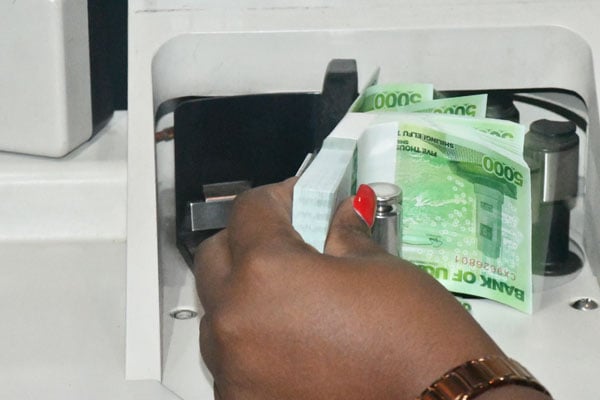
observer.ug
@observer Wed, 27 Mar 2024 06:01:12
Chaos in opposition parties as Museveni moves Muhoozi

It is indeed challenging to understand President Yoweri Kaguta Museveni’s motives behind his recent appointments, both within the cabinet and the military.
Of particular public interest was the appointment of his son, Muhoozi Kainerugaba, as the chief of defense forces (CDF), the highest position in the military hierarchy. This appointment has sparked further speculation, especially given the recent expansion of powers granted to the CDF.
Museveni not only appointed Muhoozi as CDF but also named two of his staunch supporters, Lilian Aber and Balaam Barugahara Ateenyi, as ministers of state for Relief and Disaster Preparedness and Youth and Children, respectively.
This move raises questions about whether Museveni aimed to suppress Muhoozi’s publicly known presidential ambitions, evidenced by his establishment of the Patriotic League of Uganda (PLU), or if he was actually bolstering them.
By granting Muhoozi full control over the military, including the ability to appoint allies to key positions, Museveni’s intentions could be interpreted as either sidelining Muhoozi from political endeavors or manipulating the political landscape in his favor.
The answers to these inquiries remain elusive, but it is evident that the traditional opposition, tasked with raising such concerns, is currently entangled in internal conflicts of its own. Some of the turmoil is self-inflicted, while the rest appears to be engineered by President Museveni himself. All four major opposition political parties with significant representation in parliament find themselves engulfed in internal strife.
In fact, three of these parties have already splintered into two factions each, leading to a divided leadership. The Uganda People’s Congress (UPC), the second oldest party in Uganda, is currently divided into two factions.
One faction is led by Jimmy Akena, the member of parliament for Lira Municipality and the son of the party’s founding president, Apollo Milton Obote. The other faction is led by city lawyer Peter Walubiri.
Despite court rulings deeming Akena’s leadership illegitimate due to procedural irregularities during his election, his faction is recognized by the government. Furthermore, Akena’s wife, Betty Amongi, serves as the minister for Gender Labour and Social Development.
The Democratic Party (DP) also finds itself split down the middle, with its president, Norbert Mao, having signed a memorandum of understanding with President Museveni, against the wishes of many party members. Mao now holds the position of minister for Justice and Constitutional Affairs in the NRM government.
A group led by Dr Bayiga Lulume, the member of parliament for Buikwe South, contends that Mao forfeited his leadership role the moment he aligned himself with the NRM government.
The Forum for Democratic Change (FDC) is witnessing significant changes, with a faction led by Kampala Lord Mayor Erias Lukwago, including former party president Dr Kizza Besigye, shifting base from the Najjanankumbi headquarters to Katonga road.
This group, now known as the Katonga faction, shows strong signs of forming a new political party. Meanwhile, within the National Unity Platform (NUP), the largest opposition party, a rift is emerging between party president Robert Kyagulanyi Ssentamu and his Buganda region deputy, Mathias Mpuuga.
The tension escalated following revelations that Mpuuga, during his tenure as leader of the opposition, accepted a Shs 500 million service award from the Parliamentary Commission. This financial controversy, labeled as corruption by some within NUP, builds on pre-existing conflicts between Mpuuga and Kyagulanyi, particularly after Mpuuga was replaced as LoP.
As the 2026 elections draw near, with President Museveni possibly gearing up for another term or succession, traditional opposition parties are grappling with internal strife. Joel Ssenyonyi, the newly appointed leader of the opposition, in an interview, explained that the current upheaval within NUP should be seen as part of a process to refine their political strategy for engaging Ugandan voters.
“Refining gold is a tough process, it goes through a lot of fire, but eventually, you get a refined product. What’s happening in NUP is beneficial because it helps us reorganize and identify who can withstand the fire and emerge refined. We aim to offer Ugandans a refined political product,” Joel Ssenyonyi stated.
He believes that the current challenges within the party will strengthen them, rather than weaken them.
“Demanding accountability from Museveni requires us to be accountable ourselves. This process, though tough, makes us stronger. Even if it means losing some popularity, it’s crucial for us to do the right thing,” he added.
Ibrahim Ssemujju Nganda, MP for Kira Municipality and spokesperson of the FDC’s Katonga faction, recognizes the significant impact of internal conflicts on the opposition.
“The time we should have spent strategizing against President Museveni is consumed by self-destruction,” he observed.
Ssemujju sees little chance of unity among the opposition parties, given the current divisions within FDC, DP, UPC and NUP. He suggests that neutral figures like Prof. Fredrick Ssempebwa might be necessary for facilitating meetings among the divided members.
Discussing the difficulty of aligning behind a single presidential candidate, Ssemujju notes that past opportunities to win constituencies were missed due to fielding multiple candidates.
“Even winning the presidency will be futile if NRM maintains a 70 per cent control in parliament; they could impeach the president in the first week,” he said, expressing hope for unity before 2026. When asked about the root cause of these frictions, Ssemujju attributed them to the selfish nature of many politicians.
“Ugandan politicians largely act as freelancers; we’ve become fortune hunters. When the fortunes we are chasing disappear, so does our allegiance. The majority base their political alignment on the prospects of the next election, not on Uganda’s needs,” stated Nganda.
He suggests that political affiliations are often more about personal gain than national interest. Dr Yusuf Serunkuma, a political analyst, views the opposition’s turmoil as part of a larger strategy.
He argues that the opposition has been ensnared by incentives that dilute their identity and effectiveness. According to Serunkuma, aligning with institutionalized politics under President Museveni’s neoliberal democracy leads to a loss of identity and a confusing role for opposition politicians.
“Joining politics means being captured by a system designed to control. It’s not just parliament that’s a bribe; all institutional politics is,” he remarked, suggesting that this dynamic explains the ongoing corruption in bodies such as parliament.
Serunkuma criticized Speaker Anita Among, describing her as part of a network that exploits national resources. He raised a provocative question: why do political figures in Uganda typically focus on skimming taxes and land, rather than stealing tangible assets like banks, telecoms, or industries?
His explanation is that such thefts would conflict with the interests of powerful external entities. “They can’t afford to clash with the real masters,” he concluded.
{loadposition inarticle}
read moreobserver.ug
@observer Wed, 27 Mar 2024 06:03:34
Muhoozi tipped PLU team about cabinet jobs in 2023

Last week, President Yoweri Museveni appointed Balaam Barugahara and Lilian Aber, known for their loyalty to his son, to key positions in the cabinet.
Balaam was designated as the state minister for Youth and children’s affairs, succeeding Sarah Mateke, who now serves as Minister of state for Defense and Veteran Affairs.
Meanwhile, Aber was assigned the role of state minister for Relief, Disaster Preparedness, and refugees. Additionally, Phiona Nyamutoro was appointed state minister for Mineral Development. These appointments were widely anticipated, as Balaam and Aber were reportedly involved in and knowledgeable about the selection processes that led to their ministerial roles.
Sources suggest that their appointments were influenced by Gen Muhoozi Kainerugaba, the first son and chairman of the Patriotic League of Uganda (PLU). Balaam and Aber serve as deputies to Gen. Muhoozi in western and northern Uganda, respectively.
According to sources, Gen Muhoozi requested academic documents from some of his associates to facilitate their consideration for cabinet positions ahead of the reshuffle.
One source revealed, “Gen Muhoozi asked for my academic documents, and I provided them. After submission, we were confident that our appointments were assured.”
The source further emphasized that President Museveni recognized their loyalty, determination, consistency, and ability to deliver, contrasting them with individuals perceived as opportunists and self-serving individuals seeking political gains.
“Museveni saw our dedication and competence, distinguishing us from mere speculators and opportunists seeking personal benefits,” the source added.
Speaking to The Observer shortly after the president’s announcement on X (formerly Twitter), Balaam applauded Museveni for appointing him minister and pledged to work towards improving the lives of young people and ensuring that their rights are respected.
“Museveni has done great work. This appointment is a vote of confidence. All in all, I applaud Muhoozi, who saw my worth and fished me. I will start with the Muhoozi Kainerugaba (MK) football match on Easter Monday in Ma- sindi while the Labour Day celebration will be my first assignment. I am going to be more aggressive,” he said.
He noted that upon his appointment, he received hundreds of phone calls and messages congratulating him for joining the cabinet. To his surprise, he received calls from people he had never heard of and prominent figures that he had never called or interacted with. Balaam claims that he will use the ministerial office to reach the youth and ask them to join PLU.
However, Aber refuted claims that she knew about her appointment and Gen Muhoozi never asked for any documents from her. She said they will continue pushing the agendas of PLU forward and balance the work of both the ministry and the movement.
Speaking about her appointment, Aber said it is good to be trusted by the head of state. That means that he believes in your abilities, and it is upon us to never disappoint him and deliver what is expected of us. PLU aims at working towards reviving Ugandans’ spirit of good citizenship, national pride, national service, protection of vulnerable persons, combating corruption and wastage of public resources, and protection of the environment.
Igara West MP Michael Mawanda, who is also a member of PLU, claims that the league will contribute, in a civil capacity, towards mobilizing Ugandans to fulfill their civic duties as citizens of this land, for the benefit of society as a whole, and to jealously guard the unique natural and social harmony that makes Uganda.
“We commit to ensuring that the Patriotic League of Uganda’s efforts toward reviving patriotism will remain non-partisan, non-denominational, and non-sectarian,” he said.
GENESIS OF BALAAM, ABER’S APPOINTMENT
Speaking during the NRM retreat in Kyankwanzi in June 2023, Museveni addressed the issue of frustrated youth turning to the MK group due to perceived weaknesses within the NRM.
“The issue of a standby generator (Muhoozi), I am handling it with Muhoozi and his group. The issue of Muhoozi is partly due to the weaknesses of the NRM. I remember when Muhoozi celebrated his 48th birthday, there were some soldiers and youths from Kampala and other areas, and when I analyzed it, I could see that because of the weakness of our systems, some of the frustrated youth went to the MK group, thinking that there was hope. Some of them are looking for their own interests. Some are looking for this, some are looking for that. What I did, I called and I talked to them,” Museveni said.
“It is not a good thing. You should only fight with those against your ideology. So, I am helping them. Don’t create unnecessary contradictions among yourselves.”
This publication learned that last year, Generals Museveni and Muhoozi met after the latter was criticized for allegedly indulging in politics before retiring from the army. It was after this meeting that the idea of rebranding the Muhoozi Kainerugaba (MK) movement was born.
The president later met a section of leaders of the MK movement, which included General Muhoozi, Kasambya MP David Kabanda, Balaam Barugahara, Michael Mawanda, Andrew Mwenda, and others. It has since been reported that during the meeting, Mu- seveni guided them and promised to bring them on board.
OTHER NOTABLE CHANGES
Meanwhile, the former state minister for Karamoja, Agnes Nandutu has appealed to President Yoweri Museveni for forgiveness following her removal during the mini cabinet reshuffle, which saw her replaced as the state minister for Karamoja.
Nandutu, a first-timer in both parliament and cabinet, was succeeded by Florence Wamala Nambozo. Her superior, Mary Goretti Kitutu, who also served as the Woman MP for Manafwa and was the minister in charge of Karamoja Affairs, was replaced by Peter Lokeris.
The dismissal of the two ministers is linked to the Karamoja iron sheets scandal that rocked the Office of the Prime Minister in 2023. However, other beneficiaries retained their cabinet positions. The reshuffle also saw Vicent Bamulanzeki Ssempijja, who served as the minister of Defense and Affairs, being replaced by Jacob Markson Oboth.
Oboth, who was elevated from the state minister for Defense, played a key role in the age limit debate that removed Article 102(b), which barred individuals above 75 years from standing for the presidency. At the time, he chaired the legal and constitutional affairs committee of parliament.
Dr Kenneth Omona, formerly the private press secretary to the President, was appointed state minister in charge of Northern Uganda, while Wilson Mbasu Mbadi was appointed state minister for Trade.
Speaking at parliament last Friday, Nandutu expressed her gratitude to President Museveni for appointing her among the 100 most important people in the country, stating, “I thank President Museveni for appointing me among the 100 most important people in this country, and I have done my best to serve this country.”
Despite facing challenges during her tenure, she expressed a desire to have served even more effectively, stating, “I want to congratulate my colleagues who have remained in the cabinet. I want to wish them well. I am also happy for the newly appointed ministers. Where 1 have gone wrong, I ask President Mu- seveni to forgive me.”
{loadposition inarticle}
read moreallafrica.com
@allafrica Tue, 26 Mar 2024 14:48:11
Uganda Oil Firm Begins Fuel Sales After Kenya Fallout
[The Herald] Uganda National Oil Company (Unoc) has started selling petroleum products to oil marketing firms in Tanzania and Uganda as it tests the market ahead of rolling out a direct import deal with Vitol Bahrain.
read moreallafrica.com
@allafrica Tue, 26 Mar 2024 15:05:40
No Clean Water for Refugees in Uganda and Displaced in Darfur
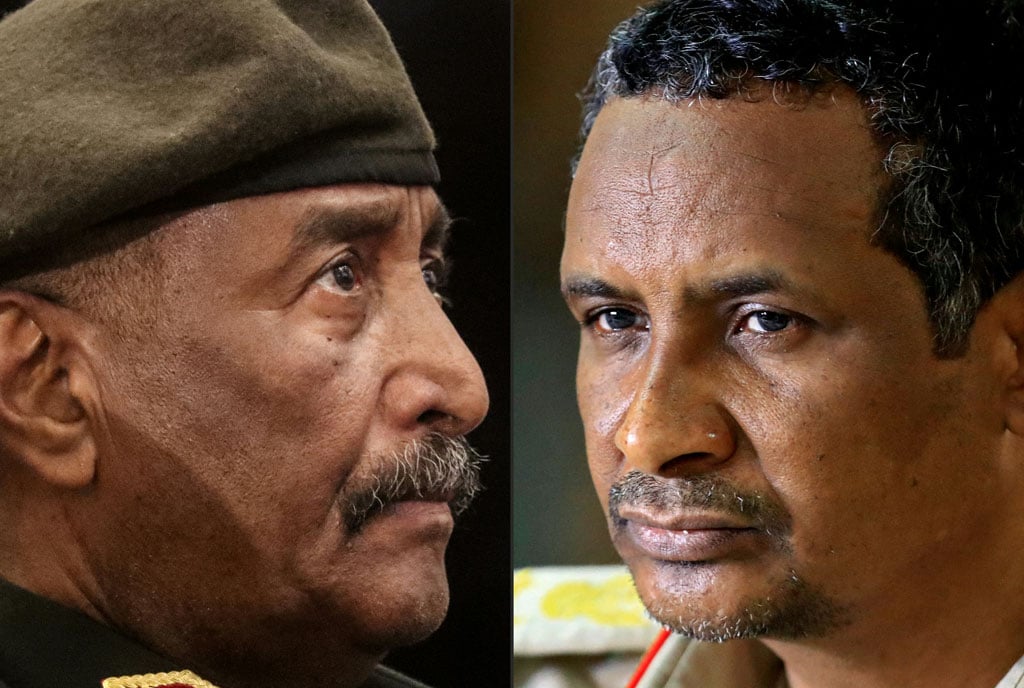
[Dabanga] Bweyale (Uganda), Sortony / Kassab / Rahad El Berd -- People living in the Sortony camp for displaced people in North Darfur, in shelter centres in Rahad El Berdi in South Darfur, and in the Kiryandongo refugee camp in Uganda all suffer from a severe drinking water crisis. The displaced in Darfur also lack food, medicines, and other basic goods. More than 60 lorries loaded with humanitarian aid are reportedly on their way to Darfur.
read morekfm.co.ug
@kfm Wed, 27 Mar 2024 05:33:31
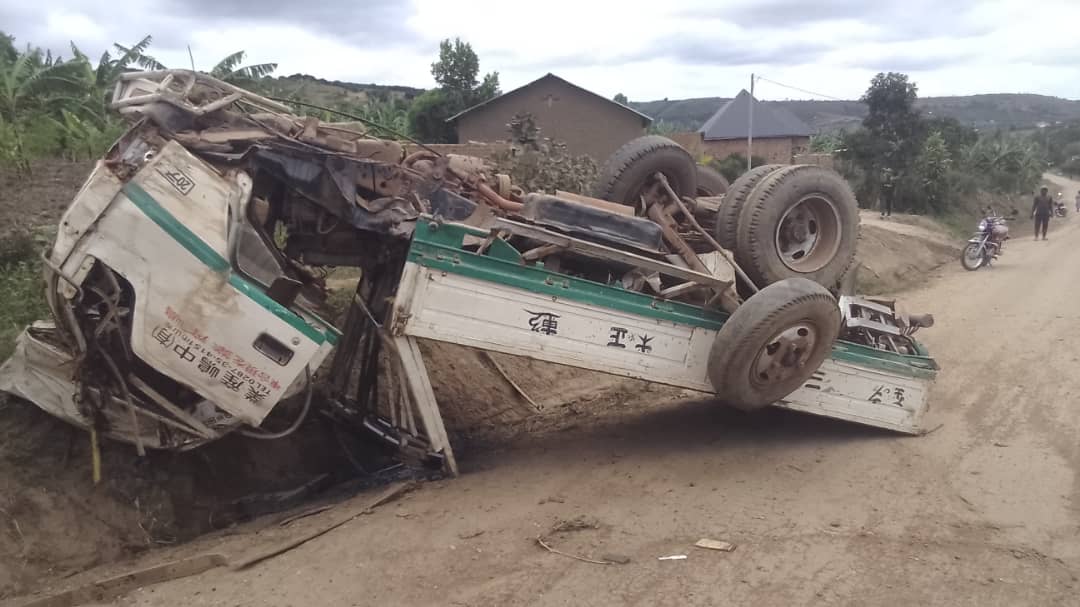
10 mourners dead, 20 injured in Rakai road crash
By Ambrose Musasizi ! Monitor Police in Rakai District are investigating circumstances under which at least 10 people died in a motor crash on their way to a burial site in neighbouring Isingiro District. The driver of a fuso truck which was carrying over 35 residents from the villages of Ssanje and Kigolomolo in Kyarurangira Sub County, Rakai District is said to have lost control before it overturned several times, killing 10 occupants on spot, and leaving several others with severe injuries. The Tuesday crash happened at around 1pm at Lwabaganda Cell, Dyango Town Council, on the border with Isingiro District. Mr Paul Nuwamanya, an eyewitness, said: “The vehicle was moving at a terrible speed before the driver lost control of […]
read morekfm.co.ug
@kfm Wed, 27 Mar 2024 05:53:11
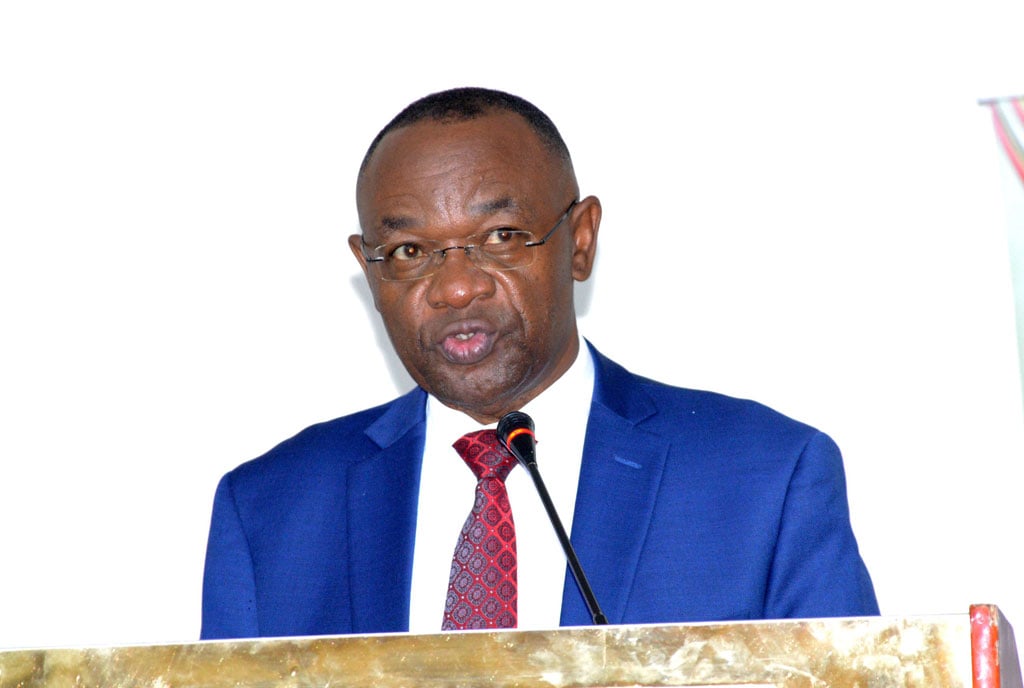
Uganda to host 22nd AfWASA congress
Uganda is set to host over 2000 delegates for the 22nd Africa Water and Sanitation (AfWASA) congress in February 2025. In 2023, the African Water Association (AfWA) voted Kampala, Uganda as the host of the AfWASA Congress and Exhibition-2025 during its Annual General Meeting held in Ivory Coast. While launching preparations for the congress at the National Water and Sewage Corporation offices in Luzira, the Minister for Water and Environment, Sam Cheptoris urged the over 40,000 participants expected to “focus on innovations aimed at nhancing the resource envelope as opposed to focusing on external funding.” The conference that is slated to be held from February 16 to 20, 2025 is themed, “Water and sanitation for all; A secure future for […]
read morematookerepublic.com
@matookerepublic Wed, 27 Mar 2024 05:56:43
Ssegirinya’s Personal Assistant gives update on MP’s health condition
The Personal Assistant of Muhammad Ssegirinya, the Member of Parliament for Kawempe North, Alex Luwemba, has revealed that the legislator is now improving and can speak, eat, walk, and recognize visitors. According to Luwemba, there has been significant improvement from his condition when he was admitted on December 23, 2023. The MP has since been […]
The post Ssegirinya’s Personal Assistant gives update on MP’s health condition appeared first on Matooke Republic.
read more