


theguardian.com
@theguardian Thu, 04 Apr 2024 09:17:03
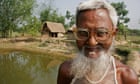
Having the right glasses could boost earning power by a third, Bangladesh study shows
Researchers find that in low and middle-income countries owning spectacles can help people over 35 can increase their income
Owning a pair of reading glasses might help people increase their earnings by a third, according to new research.
The study, conducted in Bangladesh, is the first to examine the impact of having a decent pair of spectacles, and researchers found monthly median earnings among one group of people increased from $35.30 to $47.10 within eight months, a rise of 33.4%.
Continue reading... read morematookerepublic.com
@matookerepublic Thu, 04 Apr 2024 09:37:34
In attempting to deregister Crane Bank, Bank of Uganda sparks more legal battles
Bank of Uganda has stirred controversy by issuing a notice regarding the legal status of Crane Bank Limited dated April 3, 2024. Citing Section 7(1)(a) of the Financial Institutions Act, 2004 [as amended], BoU recommended that the Uganda Registration Services Bureau (URSB) remove the word ‘Bank’ from Crane Bank Limited’s company name, effectively striking it […]
The post In attempting to deregister Crane Bank, Bank of Uganda sparks more legal battles appeared first on Matooke Republic.
read moresqoop.co.ug
@sqoop Thu, 04 Apr 2024 08:23:51
Balaam slammed on the floor of Parliament
Hours after the newly appointed Minister of State for Youth and Children Affairs, Mr Balaam Barugahara Ateenyi took oath as an ex-officio of Parliament, the Leader of Opposition in Parliament, poked his maiden presentation on the floor of the House describing him as an “excited novice minister”. In his maiden presentation on the floor […]
read morematookerepublic.com
@matookerepublic Thu, 04 Apr 2024 08:34:11
Parliament calls for swift gov’t action on Copyright Law Amendments
The Deputy Speaker of Parliament, Thomas Tayebwa, has tasked the Attorney General, Kiryowa Kiwanuka, to table the Bill amending the Copyright and Neighbouring Rights Act of 2006, expressing discontent with delays on the government’s side. The Bill was initially proposed and drafted by a private Member, Hillary Kiyaga, alias Dr. Hilderman (NUP, Mawokota County North), […]
The post Parliament calls for swift gov’t action on Copyright Law Amendments appeared first on Matooke Republic.
read moreobserver.ug
@observer Thu, 04 Apr 2024 07:10:01
Is IMF wrong on taxation of Saccos?

Saccos in Uganda are a means of providing aid to people through access to loans; so, it is only fair Saccos are exempted from taxation since they provide financial services alternative to the formal conventional banking, writes DERRICK NAHUMUZA.
The International Monetary Fund (IMF) recently issued a report after conclusion of the fifth review of Uganda’s Extended Credit Facility Arrangement. The March 6, 2024 report made several recommendations on how Uganda can ensure maximum economic recovery following the disastrous effects of Covid-19.
The IMF, like the World Bank, is one of the Bretton Woods institutions that was created to reduce poverty by lending money to governments in low-developed countries with an aim of improving their standards of living. One of its core responsibilities is to monitor economic and financial policies of member countries and providing them with policy advice that is widely referred to as surveillance.
In carrying out its mandate, this Bretton Woods institution does routine reviews of a country’s policies and offers advice and recommendations flowing from economic discoveries made. Following the unfortunate events of Covid-19, IMF undertook to offer recommendations that would enable countries that had been grossly affected by Covid-19 gain an upward economic recovery.
It’s against this backdrop that IMF recommended the removal of tax exemptions on incomes from Savings and Credit Cooperation Societies (Saccos) in its fifth Uganda review report. IMF reasoned that removal of exemptions from incomes obtained by Saccos would create a near-term revenue reform priority that would boost corporate income tax collection. However, for several reasons, IMF got it wrong.
IMF is not the first institution to advocate for taxation of Saccos. On June 4, 2018, exactly one year after the exemption had been enacted, parliament received and consequently dismissed a proposal to reintroduce tax on Saccos. The exemptions had come in place in 2017.
It is indeed true that Uganda badly needs to streamline its exemption regime as a lot of revenue is lost in tax exemptions accorded towards investors and other individuals to attract in-bound investment. In fact, as of May 20, 2023, it was reported that government loses Shs 2.8 trillion in tax exemptions, a figure that could be higher in 2024 after the commencement of the new tax exemptions in July last year.
However, even with this in mind, exemption of Saccos from taxation is greatly justified and government should think twice before heeding to IMF’s advice. What IMF and other proponents of removal of the current exemptions need to understand is that Saccos in Uganda are a means of providing financial aid to people in rural areas.
Several Ugandans that are below the middle-income curve normally use Saccos as a means to access loans and funding for their establishments such as farming and other entrepreneurial businesses.
This boosts their only hope of earning a living and thus living above the poverty line. If IMF is indeed aimed at reducing poverty and improving standards of living, it would instead offer direct funding to these Saccos to ensure members a quick access to funds as this enables individual growth which catapults economic growth of the country.
Saccos, as their name suggests, encourage savings among individuals. As it currently stands, according to the Uganda Co-operative Savings and Credit Union Limited, Uganda has about 1,368 registered Saccos. Of the 1368 registered Saccos, the approximate amount of savings is about Shs 500 billion.
As opposed to formal banking system that only accounts for 14% of the population, majority of Ugandans have run to Saccos as their ‘banks’ of choice. This enhances Uganda’s staggering savings culture which, as of 2022, was indicated by a Finscope study to be standing at a paltry 54% with an average of Shs 6,000 being saved per annum.
The main attraction to save with Saccos has been the fact that there is no tax on these savings cooperatives. Once this exemption is removed and income from Saccos taxed, several Ugandans will be discouraged from saving and participating in the economic environment of Uganda which will result in membership withdrawal from these corporative. This would be disastrous to the country.
Besides, Saccos already contribute to national coffers by paying indirect taxes and non-tax revenue through operational licenses. The argument by IMF that removing exemptions would boost corporate income tax collections, therefore, cannot stand since Saccos are already contributing their fair share to the national coffers.
In their own element, Saccos provide an alternative banking system to several Ugandans especially farmers. Formal banks already enjoy a plethora of exemptions in the current income tax regime.
For example, there is no VAT charged on provision of financial services and payment of interest from a resident person to a resident financial institution is exempt from tax. If formal banks can be granted such exemptions, it is only fair that Saccos also benefit from the exemption regime since they provide financial services alternative to the formal conventional banking.
Exempting banks and not Saccos would discourage growth of Saccos with people opting to use banks. Additionally, the exemption to Saccos was capped to 10 years and is only valid till 2027. This, as envisaged by parliament, was sufficient time to enable Saccos grow, mobilize large numbers and boost economic growth. It is only pertinent that the remaining period is left to run.
The writer is an advocate of the High court
{loadposition inarticle}
read moreallafrica.com
@allafrica Thu, 04 Apr 2024 06:45:25
UNAIDS Notes The Judgment Of The Constitutional Court Of Uganda Which Has Struck Down Certain Parts Of The Anti-Homosexuality Act, 2023
[UNAIDS] The Constitutional Court of Uganda has today struck down certain sections of the Anti-Homosexuality Act, 2023.
read moreobserver.ug
@observer Thu, 04 Apr 2024 06:12:39
Zimbabwe appeals for $2 billion to avert food insecurity

Zimbabwe appealed to the United Nations, aid agencies and individuals on Wednesday for $2 billion to avert food insecurity caused by an El Nino-induced drought.
At the State House in Harare, President Emmerson Mnangagwa declared a nationwide state of disaster. He told reporters that Zimbabwe is expecting a harvest of 868,000 metric tons of grain this year — far short of expectations and about 680,000 tons less than the country needs.
"Preliminary assessment shows that Zimbabwe requires in excess of $2 billion toward various interventions we envisage in the spectrum of our national response,” he said.
Zimbabwe isn’t alone. Malawi and Zambia declared a state of disaster earlier this year due to the drought. Edward Kallon, UN resident and humanitarian coordinator in Zimbabwe, said the world body is monitoring the severe impact of the ongoing dry spell in southern Africa. He said the crisis has far-reaching consequences across various sectors, including food and nutrition security, health, water resources, education and jobs.
So far, Kallon said, the UN has allocated $5 million from the Central Emergency Response Fund for needs such as water, hygiene, sanitation, food and medical response to a cholera outbreak.
“The UN pledges its support to the government of Zimbabwe in mobilizing resources to tackle the El Nino-induced drought,” he said. “Efforts are underway to finalize a response plan.”
Paul Zakariya, executive director of the Zimbabwe Farmers Union, said that while nothing can be done to stop climate change effects, irrigation farming is one of the methods that can be used to mitigate calamity.
“Only depending on rain-fed agriculture, we will not go too far,” Zakariya said.
The government should ensure that even farmers with small amounts of land can irrigate, he said.
“With irrigation, our farmers are producing all year round,” he said.
Zimbabwe, once the breadbasket of southern Africa, has largely depended on handouts from organizations such as the World Food Program and the US Agency for International Development in the last 20-plus years. The government attributes the food shortages to recurring droughts.
Critics attribute the problem to the confiscation of land from white commercial farmers who produced crops all year round. They were replaced with peasant farmers who let irrigation systems fall into disrepair and are reliant on rain to grow their crops.
UN agencies said they will provide funding so Zimbabwe can revive the irrigation systems. Details are expected at a news conference on Thursday.
{loadposition inarticle}
read morematookerepublic.com
@matookerepublic Thu, 04 Apr 2024 05:59:23
Who is referee Shamirah Nabadda, the Ugandan female official selected to officiate at the 2024 Olympic Games in France?
Ugandan football’s female referee, Shamirah Nabadda, has been chosen to officiate at the upcoming 2024 Olympic Games in Paris, France. This announcement was made on Tuesday by the FIFA Referees Committee, which confirmed a total of 89 match officials (21 referees, 42 assistant referees, 20 video match officials, and six support referees) from 45 countries […]
The post Who is referee Shamirah Nabadda, the Ugandan female official selected to officiate at the 2024 Olympic Games in France? appeared first on Matooke Republic.
read moreobserver.ug
@observer Thu, 04 Apr 2024 05:50:40
Fallen generals: Counting the cost

The death of Brigadier General Stephen Kiggundu due to electrocution in his bathroom at his residence in Entebbe, Wakiso district, on March 31, 2024, brings the number of Ugandan army generals that have died over the last eight years to at least 13, creating a loophole in the military strategy of the country’s defence forces and bringing to the fore the huge financial implication when the army loses such key personnel.
There are many more army officers who have died over the last 15 years, some of whom – battle-hardened and with bullet scars to show - have met their deaths under flimsy circumstances, raising questions about the safety of such valuable assets.
The death of Kiggundu, the deputy Airforce commander, resurrects memories of the loss of individuals such as Major General James Kazini, General Aronda Nyakirima, Lt General Paul Lokech, Brigadier Noble Mayombo, among others, whose deaths left more questions than answers.
This not only represents a personal tragedy for their families and loved ones but also deals a severe blow to Uganda’s military prowess and strategic capabilities. Similarly, the former Deputy Inspector General of Police (DIGP) Lt General Paul Lokech’s fatal accident while fixing a light bulb at home, which later led to a blood clot, and Brigadier General Kiggundu’s suspected electrocution raise serious questions about the safety and security protocols in place for these high-ranking officers, even within the confines of their own residences.
For example, Brigadier General Victor Twesigye died at his home in Nyarushanje, Rukungiri district on July 2, 2020 after he slid in his bathroom at his home. Major General James Kazini, the former army commander, for instance, met his demise at the hands of his girlfriend, Lydia Draru, in a domestic altercation at Draru’s home, while General Aronda Nyakirima was found dead aboard an Emirates commercial flight.
Other army generals who have died over the last eight years include Gen Elly Tumwiine, Major General Levi, Karuhanga, Maj Gen Kasirye Ggwanga, Lt General Pecos Kutesa, Maj General Eric Mukasa, Maj Gen Benon Biraaro, and Maj General Stephen Rwabantu.
The responsibility for ensuring the safety and well-being of these military leaders lies not only with their immediate families but also with the Ugandan government and military establishment, some experts say. As custodians of national security and guardians of the country’s defense capabilities, some would argue that it is imperative that adequate measures are taken to protect these valuable assets both on and off the battlefield.
The army spokesman of the. Uganda People’s Defence Force, Felix Kulaigye, said that Kiggundu, the first pilot of Uganda’s Russian-made fleet of the Su-30MK2 fighter jets, will be missed dearly.
“For us, he has been near and dear to us. We are going to miss him certainly,” he said.
There are just not many people like Kiggundu within the UPDF. Trained at the United States Command Staff College, China’s Military School, and in the Czech Republic, Kiggundu, at just 46 years old, had a wealth of experience under his belt. Not only had he been deployed to hunt down insurgents of the Lord’s Resistance Army in the jungles of Garamba, he was also part of the military campaign assigned to wipe out the Allied Democratic Forces rebels in western Uganda.
Brigadier Noble Mayombo, for instance, was not only a high-ranking officer but also a respected lawyer and influential figure in Ugandan politics, the impact of his demise extending beyond the military realm. His untimely death robbed the country of a potential future leader and deprived the nation of his visionary leadership.
Then there was Lokech, nicknamed the Lion of Mogadishu due to his brazen pursuit of the Al Qaeda-linked Al Shabaab group, whose death left the country in shock. Trained in Russia, he was seen as one of Uganda’s bravest military strategists.
The loss of such resourceful soldiers at a time when Uganda is striving to professionalize its armed forces carries significant costs. Wilson Mbadi, the former chief of defence forces, once gave a picture of how much it costs to train an army officer. While commissioning the national defence college in Buikwe in 2022, he said that Uganda spends $69,000 per person per year to train in Kenya.
In Tanzania, the government has been paying $55,000 per person per year. In the next financial year, which starts in July 2024, the ministry of Defence, plans to spend Shs 3.8bn in military training, a drop from the Shs 4 billion in the 2023/2024 budget. However, the budget is expected to go up to Shs 5.2 billion by the financial year 2026/2027, according to ministry of Finance, Planning and Economic Development.
While most of this money is spent on training selected army staff within Uganda, a smaller group is sent abroad due to the financial cost of it. For example, in 2023, out of 25,211 personnel that underwent training, 130 were trained abroad and 25,081 were trained in the country, according to the ministry of Finance.
The training courses included: basic Art Field course, Cadet course, Platoon Commanders’ course, Passed Staff course, Senior Command Staff course, Junior Command course, Marine Capt Career course, Technical Intelligence course, Non-Commissioned Officers’ course, Armour Crew course, VVIP, Counter-terrorism, basic course for LDPs among others.
A total of Shs. 2.9 billion was spent on training aids, instructor and trainee’s allowances, the ministry noted. That means that losing an army general comes with huge financial implications. Odrek Rwabogo, the son of in law to President Museveni, while paying tribute to Lt. General Pecos Kutesa, and referring to his military training, said: “It is not really how strong you are; it is not the weapons you carry. It is how smart you are; how strategic you are in terms of the objective.”
President Museveni, also reflecting on Kutesa’s life, said: “Dying at 65, was too early for such a useful person.”
Dying young while being a useful person should create room for an honest conversation about the loss of these highly skilled and young officers and the need for greater vigilance and protection of Uganda’s most precious assets.
Ultimately, the loss of these highly skilled and young officers underscores the need for greater vigilance and protection of Uganda’s most precious assets.
Failure to address these concerns not only jeopardizes the safety and security of individual officers but also undermines the country’s long-term military readiness and strategic capabilities. Uganda cannot afford to lose any more of its finest soldiers to preventable tragedies.
{loadposition inarticle}
read moreallafrica.com
@allafrica Tue, 02 Apr 2024 09:58:02
Bobi Wine, Winnie Kiiza Criticise Museveni Anti-Corruption Easter Message
[Nile Post] In his Good Friday message, Museveni praised religious leaders for condemning corruption and urged them to continue their fight against this pervasive problem.
read more