

matookerepublic.com
@matookerepublic Wed, 24 Apr 2024 06:08:55
Family members arrested for beating Muslim daughter who attended church fellowship
Police have arrested a Muslim family filmed flogging a teenage relative for allegedly attending a church service. The victim has been identified as Naula Shakira, aged 18, a resident of Bwase 1 village, Bugolya Parish, Kadama sub-county, Kibuku district, according to the Kibuku district police. Police confirmed that the incident occurred after Shakira, known to […]
The post Family members arrested for beating Muslim daughter who attended church fellowship appeared first on Matooke Republic.
read moreobserver.ug
@observer Wed, 24 Apr 2024 05:34:38
Science tutors maintain strike despite government appeals

Science tutors at 23 core Primary Teachers Colleges (PTCs) across Uganda have steadfastly continued their strike, despite appeals from the ministry of Public Service to end the industrial action.
The strike, which began on April 3, 2024, was initiated by members of the Uganda Professional Science Teachers’ Union (UPSTU). The union has cited the government’s decision to remove science tutors and some ICT teachers from the approved science pay scale as the primary reason for their protest. The ongoing strike highlights the educators’ resolve in seeking fair compensation and recognition for their roles within the educational system.
The changes were noticed from July-August 2023 to the present, with some tutors having gone for eight months without pay. Tutors on the U4 scale (graduates) saw their monthly pay reduced from Shs 4 million to Shs 1.1 million, and diploma holders on the U5 scale experienced reductions from Shs 2.2 million to approximately Shs 800,000 and Shs 900,000.
UPSTU leaders have demanded that the ministry of Public Service address issues with its technical officers who mistakenly removed science tutors from the payroll and downgraded their approved pay, contrary to guidance from the ministry of Education affirming their status as scientists in these institutions.
In a letter dated April 1, Stephen Opio Okiror, representing the permanent secretary of the ministry of Public Service, wrote to the UPSTU general secretary, urging science tutors to end the strike.
Opio highlighted in the letter that the ministries of Public Service and Education are actively working to address the salary concerns raised by the union leaders.
He wrote, “The purpose of this communication is to ask you to call off the ongoing industrial action and allow us time to conclude on the issue. However, for this issue to be adequately resolved, there is need for policy harmonization – a reason it has taken time to conclude,” Opio is quoted as saying.
He invited the UPSTU leaders to an inter-ministerial meeting scheduled for early May 2024, where the government will present its position and discuss any other outstanding issues.
In a decisive move, the UPSTU leaders have resolved to continue applying pressure on the ministry of Public Service, vowing to persist with their industrial action until concrete steps are taken to resolve their grievances.
“We appreciate the steps taken so far to resolve the matter. In our internal discussion, we have agreed to halt the industrial action immediately after the affected science tutors are reinstated on their appropriate science salary scale,” said UPSTU General Secretary Aron Mugaiga in a letter dated April 17, 2024. The UPSTU’s response was received by the ministry of Public Service on April 19, 2024.
Mugaiga continued: “We hope this reinstatement is carried out promptly to allow our members to resume work accordingly. We remain committed to continuing our engagement with you to ensure that this issue is completely resolved.”
He emphasized that since the ministry of Education has clarified that the affected tutors are indeed scientists, “we ask you to reinstate all those affected at the various colleges.”
MAGNITUDE OF THE STRIKE
Science tutors who spoke to The Observer said that the disregard for their welfare is demoralizing the teaching profession, which has recently seen policy adjustments aimed at restoring its prestige.
In April 2019, the cabinet approved the National Teacher Policy, which requires that anyone entering the teaching profession at any level must hold at least a bachelor’s degree. All current teachers who do not have degrees must obtain one by August 2029. Teachers who will be 60 years old by 2029 are exempt from this requirement.
Presently, many Grade III teachers [those who completed secondary education S.4 and received certificates in Education] have enrolled in colleges to earn diplomas as part of their degree upgrade. Unfortunately, the tutors who typically teach these weekend courses are on strike—a situation that could potentially extend the teachers’ study period.
The strike has gained substantial support from both arts teachers and students, who have shown solidarity with the science tutors. At Busuubizi Core PTC in Mityana, the first college affected by the strike, the principal has unsuccessfully tried to engage with the tutors.
A tutor from Busuubizi, who preferred to remain anonymous, shared, “People are receiving messages threatening imprisonment for participating in the strike. I used to earn Shs 4m as a science tutor, but my pay was suddenly reduced to about Shs 750,000 without any explanation.”
David Natukunda, a science tutor at St George’s Ibanda Core PTC, reported that no science tutors have been present at the college since the strike commenced. “Students are supposed to be conducting research, but we are not there to guide them as expected. Additionally, some students were supposed to participate in sports in Kabale, but the Physical Education tutors refused to prepare the students,” Natukunda said.
At Bishop Willis Core PTC in Iganga, Andrew Magenge, a Mathematics tutor, noted that most students in the humanities have started skipping lectures. “Last weekend, of the 130 students enrolled in science disciplines, only five showed up, and they were not attended to,” he explained.
Magenge added, “We are fully committed to the strike. The college administration organized a staff meeting, but none of the 25 science tutors attended. We remain steadfast and resolute; until our concerns are properly addressed, we will not return to teaching.”
Smith Tayebwa, an Integrated Science tutor at Bushenyi Core PTC, called on the public service to address their concerns swiftly. “Our main worry is that we might close the financial year without receiving our pay and arrears. The Public Service mistook us for primary school teachers, which we are not. We hold degrees and are currently pursuing master’s degrees as required by the new policy,” he explained.
EDUCATION MINISTRY RESPONDS
Dr Denis Mugimba, spokesperson for the Education ministry, clarified in an interview that some science tutors were inadvertently removed from the approved pay scale by the Public Service ministry during the transition from the Integrated Personnel and Payroll System (IPPS) to the Human Capital Management (HCM) system. Unfortunately, the HCM system does not recognize some tutors as scientists.
“It is incorrect to say that the Education ministry has not been proactive in this matter. We have already submitted the necessary details requested by the Public Service. Furthermore, the issue regarding the staff who have not been paid for several months has now been resolved,” Mugimba stated. He added that discussions continue with the ministry of Public Service and the affected science tutors.
For more details, contact nangonzi@observer.ug
observer.ug
@observer Wed, 24 Apr 2024 05:38:08
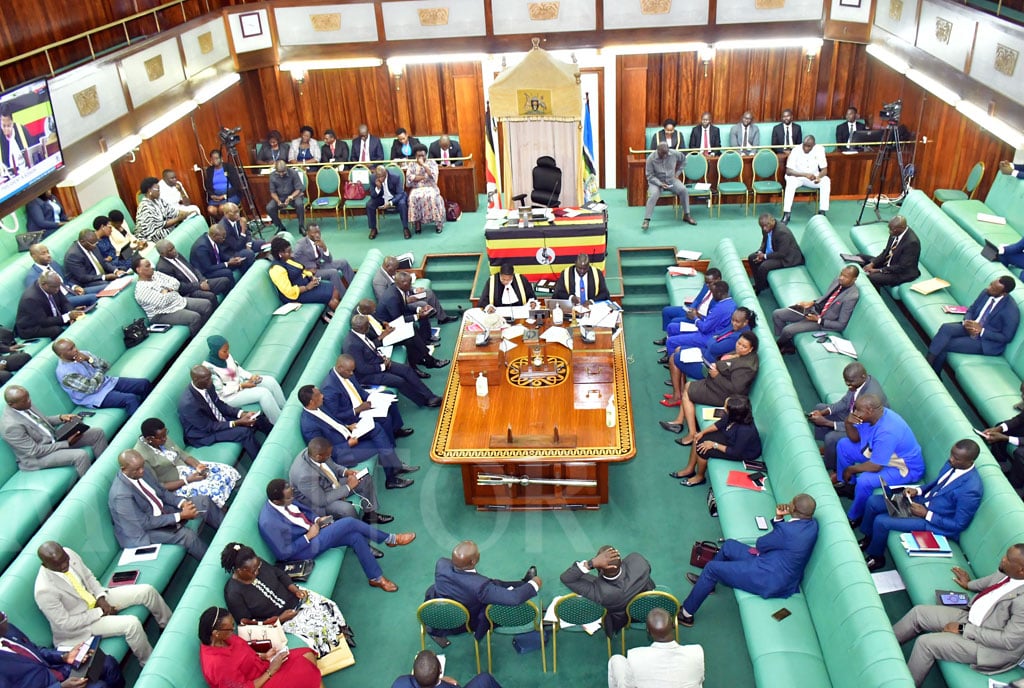
MPs bribed to save government agencies

According to multiple sources interviewed by The Observer, members of parliament (MPs) have allegedly received bribes ranging from Shs 500,000 to Shs 2 million to advocate for the retention of certain agencies that the government had proposed to return to their mother ministries.
These agencies, facing the prospect of being phased out, have been actively lobbying MPs to support their continued existence. The financial incentives reportedly come from influential figures within both the government and parliament, aiming to sway MPs in favor of retaining these agencies.
Speaking on condition of anonymity, MPs revealed that they had been approached with offers of money to back the preservation of agencies such as NITA-U. One MP from Eastern Uganda disclosed, “I was given US$500 [ Shs 1.9m] to support the retention of NITA-U, and I know many of my colleagues were given the same. I really don’t know why they wanted that organization to stay, but you would see the energy invested in the project as if it was personal.”
These clandestine payments underscore the lengths to which certain entities are willing to go to influence legislative decisions in their favor. Another MP representing a constituency in Buganda also acknowledged receiving US$500 for the same purpose.
“It’s been quite a week here at parliament. You get money to save an agency you’ve never even heard of. It’s crazy, but that’s the reality,” the MP commented.
Furthermore, another MP, who confirmed receiving funds to support the retention of certain agencies, highlighted that many of these agencies, not facing phase-out, have been engaged in a lobbying campaign since President Museveni initially proposed the merger of government agencies. This initiative aimed to eliminate role duplication and reduce the cost of public administration.
“They enlisted MPs to canvass support for them. Here in parliament, nothing comes without a cost. It’s rare for MPs to endorse a position without financial incentive. So, these agencies have been providing funds either through direct bribes or by organizing formal meetings and workshops with MPs, where they explain their work. At the end of such events, MPs receive substantial transport refunds. This has been ongoing for over a year,” revealed a female MP from Eastern Uganda.
Parliament has so far voted to preserve several entities, including the Coffee Development Authority, NAADS, NITA-U, Dairy Development Authority, Cotton Development Authority and the National Forestry Authority. Additionally, MPs have voted to merge the Export Promotion Board and Uganda Zones Free Authority, along with merging the Uganda Wildlife Education Centre with the Uganda Wildlife Authority.
Furthermore, they have decided on the integration of the Nation Youth Council, National Council for Elderly Persons and Persons with Disabilities, Elders Council, National Children’s Council, and National Women’s Council.
Two senior officials from separate agencies, one of which has been spared while the fate of the other remains uncertain, informed this newspaper that MPs’ decisions regarding these agencies are influenced more by the amount of money these agencies pay rather than their actual relevance.
“Although we have indeed accomplished significant work, the real influencing factor was the payments we made to them. MPs have intermediaries who negotiate on behalf of the group. Essentially, we are being extorted by MPs,” one official disclosed.
The official from another agency that was retained added, “Before I entered government, I used to hear these stories and somewhat dismissed them. However, I can now attest that an MP can demand nearly a quarter of your budget. As the accounting officer, you are then compelled to fabricate activities to account for the payments made to these MPs.”
These testimonies corroborate the recent complaint by the minister of Public Service, Muruli Mukasa, who expressed concerns that the decision to retain certain agencies was influenced by intense lobbying efforts by these agencies rather than their actual relevance. However,
Speaker of Parliament Anita Among swiftly refuted Mukasa’s claims, denying allegations that MPs were bribed to preserve specific agencies.
“Our conscience is clear; nobody has been bribed. Whatever actions we undertake here are on behalf of our constituents. If people want to engage in blackmail or spread rumours about bribery, that’s their business. Our focus is on fulfilling our duties,” Among asserted.
“It is the duty of MPs to legislate. They require no bribery to fulfill their responsibilities. Anyone with evidence of bribery should take legal action. Repeatedly making allegations of bribery is often done by individuals who believe everything revolves around them. Many have been deceived by such scandalous claims, suggesting there’s excessive money in parliament. Some have even risked their assets to join parliament in hopes of gaining wealth, only to leave poorer than when they entered,” Chris Obore, the director of Communication at parliament said.
Reports of bribing MPs to carry out their duties have been rampant in recent years. While paying tribute to former Dokolo Woman MP, Cecilia Ogwal, President Yoweri Kaguta Museveni acknowledged reports that some MPs were soliciting bribes from entities appearing before them.
mmkakembo@gmail.com
{loadposition inarticle}
read morematookerepublic.com
@matookerepublic Wed, 24 Apr 2024 05:37:24
MPs return mandate to supervise NGOs back to Internal Affairs Ministry
Legislators have scrapped the Non-Governmental Organizations (NGOs) Board, returning its mandate of overseeing the operations of NGOs back to the Ministry of Internal Affairs. This occurred while the lawmakers considered the NGO (Amendment) Bill, 2024, passed during the plenary sitting on Tuesday. The Chairperson of the Committee on Defence and Internal Affairs, Hon. Wilson Kajwengye, […]
The post MPs return mandate to supervise NGOs back to Internal Affairs Ministry appeared first on Matooke Republic.
read moreobserver.ug
@observer Wed, 24 Apr 2024 04:47:35
Police officers face arrest over illegal arrests

Isaiah Igumira, the head of legal and complaints at the Criminal Investigations Directorate (CID) headquarters, has announced that the police will implement rigorous measures to combat collusion between its detectives and lawyers in orchestrating illegal arrests and prolonged detention of suspects.
This initiative comes amidst heightened concern over the disappearance of 18 individuals reportedly arrested during and after the 2021 electoral campaigns. The 2024 rule of law report highlights that these missing Ugandans were apprehended by security personnel from various locations and held in undisclosed facilities without being presented in court.
Despite concerted efforts, key government agencies such as the Uganda Police Force and the Uganda Human Rights Commission have been unable to provide information regarding their whereabouts.
The pledge by the police underscores the urgency to address systemic issues within law enforcement agencies to safeguard the rights and liberties of individuals, ensuring accountability and transparency in the justice system.
Speaking during the release of the rule of law report, Igumira stated that over-detention is not a police policy.
“We have implemented stringent measures against our detectives who over-detain or carry out illegal detentions. More often, we see officers making premature arrests, and we are actively addressing this issue within the department to ensure that arrests are properly warranted.”
He noted that such cases of illegal and excessive detention often arise from misleading practices by some lawyers in practice.
“They deceive low-ranking police detectives by claiming that they have a solid case and that the suspect intends to flee. By the time the arrest is made, it turns out that the lawyer was merely following instructions from the complainants. We cannot stand idly by when illegal activities are occurring, regardless of the parties involved.”
Igumira also criticized the criminalization of civil cases, where lawyers misrepresent civil disputes as criminal to the authorities.
“Often, lawyers will present an offense in a transaction as criminal, but a closer examination reveals it to be purely a civil matter, such as disputes over loans wrongly classified as obtaining money by false pretense. We have had to subject several detectives to disciplinary proceedings for wrongly criminalizing civil cases.”
“By our mandate, we are the first defenders of human rights. It is in my interest that human rights are respected. However, like any other institution, we occasionally face issues with bad apples,” he said.
“We are implementing mechanisms to ensure that officers are held accountable. We plan to launch a call center where individuals can lodge their complaints without needing to visit CID offices directly. We will make sure that each complaint is thoroughly followed up on, and feedback is provided. It’s crucial to understand that if there is anarchy, no one is spared,” he noted.
{loadposition inarticle}
read moreobserver.ug
@observer Wed, 24 Apr 2024 02:57:18
Is Uganda truly a prime destination for investors?

In an attempt to entice high-value foreign investors; countries worldwide have gone to untold lengths to put together packages to wheel in high-net-worth businessmen to invest in their economies.
The USA has got the $1 million [UGX 3.8 billion] green card issued under the EB-5 program. In this scheme, wealthy foreign nationals willing to invest $800,000 [UGX 3 billion] to $1 million in an approved project that promises to create jobs for Americans, are set on a path to legal residency in the USA.
The UK up until February 2022 ran the Tier 1 investor visa commonly known as the golden visa which guaranteed citizenship in 5-6 years and permanent residency in 2-5 years to individuals with access to a minimum of £2 million [UGX 9.4 billion]. This project was shut down because the UK was leery of dirty money from Russian investors.
In comes Uganda, which provides free land, safe passage for repatriation of profits for investors, a tax holiday of up to 15 years on a corporation’s profits: if an investor is going to invest $10 million [UGX 38 billion], and access to cheap electricity. This was reaffirmed by the state minister for Investment and Privatisation Evelyn Anite at a State House function hosted for Sudanese president Omar Bashir and his envoy in 2017, and in a video making rounds on social media by the minister.
“We give you land for free; we can give up to fifteen years tax holiday ... and that’s corporation tax by the way; if you invest $10 million worth in our economy, and then we’ll make sure you get access to electricity at only five cents ...” Evelyn Anite says in the video. Her pronunciation highlights key flaws in policy which have cost the country dearly.
First, is the tax expenditure concern which is the cost the government foregoes when it awards tax exemptions to businesses. The IMF country report No. 2024/077 estimates that for the financial year [FY] 2022/23, one per cent of Uganda’s GDP is foregone in tax exemptions,
“while an even larger part of tax exemptions is administered outside the Uganda Revenue Authority [URA] domain”, the report asserts. Tax expenditure is real money that goes out of Uganda’s treasury.
The parliamentary budget committee report for FY 2023/24 places the figure of tax exemptions at 2.478 trillion shillings [$655.1 million] which is 1.56 per cent of GDP. The report continues to state that government has no clear criteria, or guidelines for selecting tax expenditure beneficiaries. What’s more, the government has never made a tax expenditure monitoring and evaluation report.
Inherently, tax exemptions favour big investors, and even bigger employees who rank high in organisations’ structures while paying the majority of workers poorly, denying them benefits like housing, and health. In Uganda, an inclusion of a tax exemption policy to favour nationals is still out of reach for many local investors who have to invest $300,000 [UGX 1.1 billion] in manufacturing in one of the industrial parks situated across the country to qualify for a ten-year tax holiday.
This calls into question the merits of this policy to the economy as after enjoying this benefit, [foreign] businesses can pack up, and leave with all their profits as guaranteed by the government.
In the past, government’s issuance of tax exemptions to particular investors has bordered on fanaticism as it was ferreted out by the parliament’s accounts committee in 2014 that Bidco, an oil palm-growing company, was enjoying an unheard of 25-year tax holiday.
In the same breadth, it came to light that government was eating out of the palm of now bankrupt investors — AYA group, which is run by Sudanese born businessman Mohammed Hamid by footing all the group’s tax obligations according to the Auditor General’s report of 2015/16.
The effectiveness of the tax holidays given to the two firms — AYA and Bidco to the economy is questionable as AYA has since gone bankrupt, and Bidco was rocked by a workers’ strike due to poor woking conditions. This suggests that the revenue the government forewent from these two investors was misplaced, and will not be recovered in any way, shape or form.
The fact that Uganda is able and willing to give anyone sporting an investor cap long tax holidays may indicate desperacy, and that the economy isn’t vibrant enough to appeal to serious investors hence the unrestrained sign-on perks.
In a report issued by the IMF on Uganda in March 2024, the international lender advises government to conduct a cost-benefit analysis of tax incentives to determine their impact, and also strengthen controls for their administration to limit leakages.
On the authority of Uganda Bureau of Statistics [UBOS] in a 2022 report, the poverty head count ratio in Uganda is estimated at 42.1 percent. The report: UBOS Multidimensional Poverty Index claims that 15 percent of the population in Uganda is poor.
Another report released by African Development Bank [AfDB] — The Middle of the Pyramid: Dynamics of the Middle Class in Africa, states that Uganda has a middle-class of 8.1 per cent in the total population.
This means that Uganda’s middle-class is smaller than that of Kenya at 16.8 per cent, Togo at 8.8 per cent, Djibouti at 14.8 per cent; but is bigger than that of Tanzania which is at 2.9 per cent, Rwanda at 2.6 per cent, and Burundi at 2.9 per cent. All being percentages representing the middle-class in the total population.
The AfDB classifies the middle-class as individuals with an annual income exceeding $39,000 [UGX 147.5 million], loosely translated as UGX 12.2 million monthly income. At the same time, the report points out that a larger proportion of Uganda’s middle-class falls in the category of the floating middle-class which spends between $2 [UGX 7,500] to $4 [UGX 15,000] a day, and is at risk of relapsing into poverty.
Overall, the middle-class inclusive of the floating middle-class makes up 18.7 per cent in the population. This group [floating middle-class] struggles to pay rent, school fees, doesn’t have access to good health care, and is afraid to have children for fear of not being in position to provide for them.
The middle-class is the backbone of any economy because of its purchasing, and investment power which stimulates economic growth. A small and incoherent middle-class can be interpreted as a slow growth, even regressing economy.
When that is added to 51.53 percent of the population living on less than $1.25 [UGX 4,700] a day, which is more than the number of people living below the international poverty line in Kenya — 19.72 per cent, Ethiopia 39.04 per cent, and Togo 38.68 percent; this puts into perspective the purchasing power within Uganda’s economy. Further, it explains the exodus of several multinational corporations: British airways, ShopRite, Game Stores, Etihad Airlines, Vodacom and Africell Telecommunications, Barclays bank; and many more out of the Ugandan market.
Other concerns of extreme importance to a bonafide investor looking to pitch camp in Uganda are: a lack of market depth, the Absa financial markets index 2023 gives Uganda a 46 out of 100 score in this category. The capacity of local investors which is conspicuously low with a 14 out of 100 score in the Absa financial markets index 2023.
When foreign investors come into the market, they will need to work with local investors as suppliers, agents; but because the local investors are beggared, it raises the cost of doing business in Uganda.
The violent political atmosphere, bureaucratic red tape, corruption, and flagrant human rights record make Uganda a less desirable economy to do business in.
When I reached out to the state minister for Investment and Privatisation Evelyn Anite for comment via text, and on phone regarding this matter, she didn’t respond. Izama Angelo, board member Uganda Investment Authority, was on call; and editorialized Uganda’s open policy: that investors would carry their profits back home is what sets Uganda apart as a suitable investment destination.
He showed optimism towards the availability of an educated workforce consisting of graduates produced annually. On countries like Djibouti having a bigger middle-class than Uganda Mr. Izama said, “the economy of Djibouti is fully dependent on foreign military bases stationed there with only a small section of the ruling family living affluently in the countryside”.
This isn’t typically the case for Uganda which has a diversified economy depending on agriculture, mining, energy, and manufacturing sectors.
Not all is doom and gloom in Uganda since the population is one of the youngest in the world, and many sectors are only starting to take form, which creates investment opportunities and advantages for early investors. Also, savvy [foreign] investors can easily exploit loopholes in the system.
Nevertheless, the government has got to find an equilibrium to benefit the indigenous investors through policy and capacity building with the same vigour they award foreign investors.
kidambamark3@gmail.com
{loadposition inarticle}
read moreobserver.ug
@observer Tue, 23 Apr 2024 21:16:43
Uganda Development Bank maintains highest AAA (uga)’ Fitch rating

Uganda Development Bank (UDB), the nation’s premier development finance institution, has maintained its National Long-term Rating of ‘AAA (uga)’ with a stable outlook, the highest attainable on Uganda’s national scale.
This rating reflects the government’s strong inclination to offer support to the bank, as indicated by a statement issued by UDB on April 22.
Furthermore, Fitch Ratings has affirmed UDB’s Long-Term Issuer Default Rating (IDR) at ‘B+’ with a Negative Outlook, along with UDB’s Government Support Rating (GSR) at ‘b+’. These ratings underscore the government’s robust propensity to extend support to UDB.
Key Rating Drivers
The Government Support Rating (GSR) aligns with Uganda’s sovereign rating, illustrating Fitch’s assessment of the authorities’ significant readiness to extend support. The Negative Outlook on UDB’s Long-Term IDR mirrors that of Uganda’s sovereign rating, as highlighted in the Fitch Rating report.
Fitch Ratings highlighted several factors driving the ratings for Uganda Development Bank (UDB):
High propensity to support: The Ugandan government demonstrates a strong inclination to support UDB, driven by the bank’s crucial policy role, complete state ownership, substantial state-guaranteed funding, and consistent capital injections.
Important policy role: UDB functions as Uganda’s primary development bank, offering loans on favorable terms to key sectors like agriculture. Its funding primarily comprises equity, supplemented by regular government capital injections and low-cost borrowings, largely government guaranteed.
Government ownership: UDB operates under 100% government ownership through the ministry of Finance, Planning, and Economic Development.
Government capital contributions: The bank maintains robust capitalization, evident from a tangible leverage ratio of 81% as of end-2022. Regular government capital injections, totaling UGX 829 billion (USD 227 million) between 2019-2022, reinforce this aspect, with no dividends paid out. Fitch anticipates continued government capital contributions.
State funding guarantees: UDB’s non-equity funding largely consists of borrowings from development finance institutions, predominantly government-guaranteed as of end-2022. Liquid assets comfortably cover upcoming debt repayments.
High-risk appetite: UDB extends loans to higher-risk clients underserved by domestic commercial banks, particularly in agriculture and agro-processing sectors. Concentrations in these sectors pose potential asset-quality seasoning risks.
Substantial loan book growth: UDB has experienced significant loan book expansion over the past two years (2022: +54%; 2021: +53%), aiming to amplify its development impact. However, robust loan growth introduces asset-quality seasoning risks.
Robust profitability: UDB achieves strong profitability, with annual operating returns on assets averaging 4.5% in 2019-2022. This profitability stems from a wide net interest margin, benefiting from a low cost of funding attributable to UDB’s sizable equity base and funding guarantees.
UDB’s managing director, Patricia Ojangole, hailed the Fitch Rating as a testament to the bank’s robust funding and liquidity profile, healthy capitalization, and sound asset quality. She emphasized UDB’s strategic importance in Uganda’s socio-economic development, expressing gratitude to the government, ministry of Finance, and other stakeholders for their instrumental support.
UDB boasts an ESG Relevance Score of ‘4[+]’ for Human Rights, Community Relations, Access & Affordability, reflecting its policy role in financing under-banked and underserved sectors of the Ugandan economy. This positively impacts the government’s support propensity, supplementing other rating factors.
As per Fitch Ratings, the highest level of ESG credit relevance is a score of ‘3’, denoting that ESG issues are credit-neutral or minimally impact the entity. UDB’s scores are aligned with those of most banks rated by Fitch globally, except for a score of ‘4’ for “Human rights, community relations, access & Affordability”.
The rating committee concluded that this factor positively influences the Long-Term Issuer Default Rating, driven by the Government Support Rating. UDB’s policy role, inclusive of servicing underbanked populations in Uganda, augments the government’s support propensity toward the bank, thereby positively impacting the Long-Term IDR.
In summary, the Fitch Rating underscores UDB’s pivotal role in Uganda’s development landscape, supported by its robust financial standing and policy-oriented initiatives aimed at fostering socio-economic progress.
{loadposition inarticle}
read moreobserver.ug
@observer Wed, 24 Apr 2024 05:30:30
After NSSF court ruling, Byarugaba unveils plan B

Richard Byarugaba, the former managing director of the National Social Security Fund (NSSF), has embarked on a new academic pursuit aimed at enhancing his proficiency in the investment sector.
Byarugaba’s decision to pursue further education stems from a series of events involving Betty Amongi, the minister of Gender, Labour and Social Development.
Byarugaba’s departure from his previous role was precipitated by Amongi’s choice not to extend his contract. The rift between the two emerged following Byarugaba’s reluctance to allocate a sum of Shs 6 billion towards the minister’s proposed initiatives aimed at bolstering NSSF’s efforts in ensuring employer contribution compliance and augmenting contributions.
Amongi claimed that issues such as corruption, collusion with contractors, and indiscipline, among other allegations raised by Gen Salim Saleh during his meeting with the NSSF top brass at Kapeeka on June 12, 2022, had constrained her. However, a parallel group, comprising disgruntled NSSF officials, had already earmarked Byarugaba’s deputy, Patrick Ayota, to assume leadership.
“I am currently enrolled in school, studying to sit for the Level II Chartered Financial Analyst (CFA) exam. It is renowned as the foremost investment management qualification globally, and I anticipate completing it within the next few weeks,” Byarugaba disclosed.
The CFA program is tailored to provide students with expertise and practical skills in investment analysis essential for career advancement. Consisting of three parts, the program assesses proficiency in investment tools, asset valuation, portfolio management, and wealth planning. It is typically pursued by individuals with backgrounds in finance, accounting, economics, or business.
Level one and two CFA exams typically require between five and seven weeks of dedicated study, including completion of the Practical Skills Module, while level three exams generally span between six and eight weeks. The registration fee for each level exam amounts to $1600 (approximately Shs 6 million).
Upon completion of the program, application, and acceptance by the CFA Institute, individuals earn the right to use the prestigious CFA designation. CFA charter holders are equipped to assume senior and executive roles in various fields such as investment management, risk management, and asset management.
As described by Dr Adam Hayes, a CFA charter holder, the Chartered Financial Analyst (CFA) designation holds global recognition and is bestowed by the CFA Institute.
From its inception in 1963 through November 2023, over 3.7 million candidates have undertaken the CFA exam. Historically, the overall pass rate has stood at 45 per cent. Over the period spanning 2014 to 2023, the 10-year average pass rate was 43 percent. The sustained pass rate below 50 per cent in recent decades underscores the rigorous nature of the CFA Charter, rendering it one of the most challenging financial certifications to attain.
“To attain charter holder status, candidates must successfully pass three challenging exams, hold a bachelor’s degree, and possess a minimum of 4,000 hours of relevant professional experience accumulated over at least three years. Achieving success in the CFA Programme exams demands considerable discipline and a significant amount of dedicated study,” he emphasized.
Byarugaba’s court petition to retain office
Last week, the High court dismissed Richard Byarugaba’s case wherein he contested Betty Amongi’s decision not to renew his contract as the former managing director of the National Social Security Fund (NSSF).
In August 2023, Byarugaba filed a petition with the court, seeking orders compelling Amongi to fulfill her statutory obligations and reinstate him as the managing director of NSSF, in line with the board’s recommendation.
He argued that Patrick Ayota, the incumbent managing director of NSSF, was unsuitable to lead the fund. Byarugaba had served as the NSSF MD from August 2010 to November 30, 2022, overseeing the growth of the fund to Shs 17 trillion.
Byarugaba observed that before the completion of his second contract term, Amongi sought to prematurely terminate it, citing the applicant’s supposed mandatory retirement upon reaching the age of 60 years. However, intervention by the attorney general facilitated the completion of the second term.
In his verdict, Justice Musa Ssekaana remarked that the applicant failed to specifically demonstrate how his legitimate expectation was thwarted. While acknowledging the existence of correspondence from various offices, such as the attorney general’s opinion regarding the applicant’s continued tenure as managing director beyond the age of 60, these communications should not impede the minister’s discretion to decide whether to reappoint the applicant or reject the recommendation.
“The applicant’s so-called legitimate expectation amounted to little more than a wish, and could not serve as a basis for demanding a hearing before the Minister’s decision to reject his reappointment,” justice Ssekaana ruled.
He further stated that Amongi did not violate any legitimate expectation of the applicant, emphasizing that the decision not to reappoint him constituted an exercise of the minister’s discretion. He further ruled that the court cannot nullify the appointment of Patrick Ayota, which was made based on the board’s recommendation.
Such a decision would violate the principle of fairness and would amount to condemning the board unheard regarding their decision. Therefore, the application fails and is dismissed with no order as to costs.
Interviewed after the court ruling, Byarugaba stated, “We had our day in court. We thank you for hearing us out. We accept the ruling. We will not appeal the matter.”
“We express gratitude to the appointing authority, the president, for giving us the opportunity to serve the nation as managing director of NSSF for over a decade. We did our best, and there is evidence to show significant progress in the fund. Posterity will hopefully judge us accordingly,” he concluded.
geofreyserugo1992@gmail.com
{loadposition inarticle}
read moreobserver.ug
@observer Wed, 24 Apr 2024 02:45:42
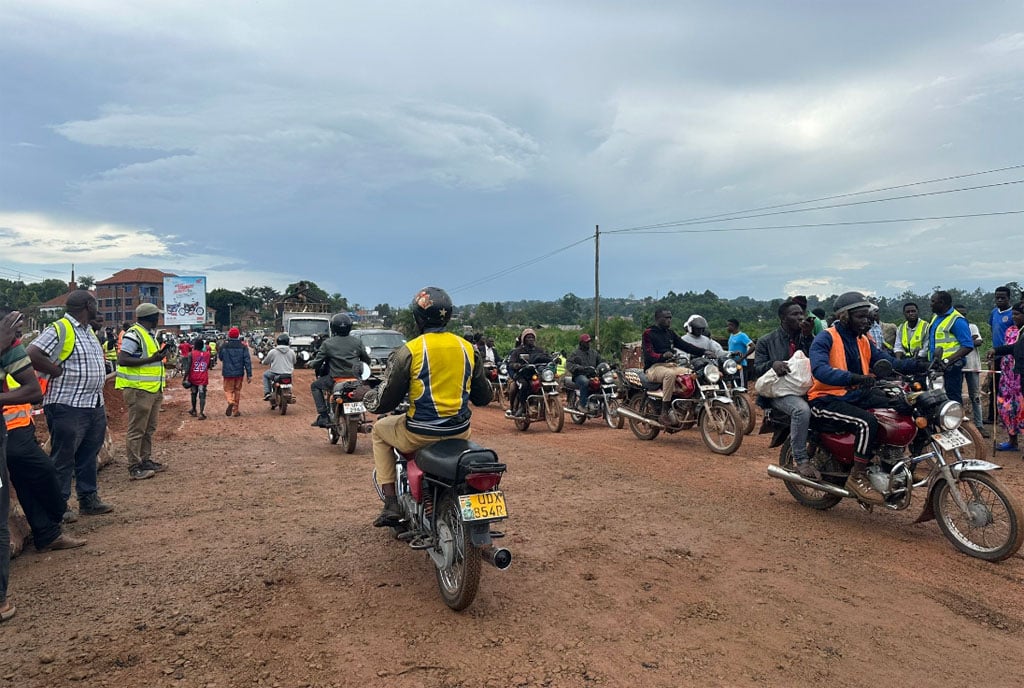
Kampala to enforce 30km/hr speed limit for safer roads

In response to the escalating frequency of road crashes in the country, Bageya Waiswa, the permanent secretary of the ministry of Works and Transport (MoWT), has announced plans to introduce a new traffic regulation targeting speeding drivers, slated to commence in July.
The primary objective of this regulation is to mitigate the number of fatalities and injuries resulting from road crashes annually nationwide. Research conducted by the International Collaboration on Mass Casualty Accidents (ICOMAS), as outlined in a study by Global Public Health, reveals that road crashes disproportionately impact the working-age population, particularly those aged between 15 and 64 years.
This demographic segment is often compelled to traverse roads in pursuit of livelihood opportunities, rendering road accidents a significant societal burden characterized by substantial loss of income, incurred medical expenses, and the tragic consequences of death or disability.
The Traffic and Road Safety (Speed Limit) Regulations, 2024 will mandate drivers to reduce their speed in urban and built-up areas, as well as school zones, from 50km/hr to 30km/hr, aiming to address speeding, which stands as the leading cause of road crashes.
“In 2023, over 4,806 individuals lost their lives on Ugandan roads, averaging 13 deaths per day. Road safety experts and advocates are calling for the implementation of a 30-kilometer-per-hour speed limit in all school zones, urban areas, and built-up areas,” remarked Bageya.
According to a recent UN report, Uganda experiences an average of 10 fatalities per day due to road crashes, with speeding being identified as the primary contributing factor.
This statistic positions Uganda with the highest rate of road crash fatalities in the East African region. According to Robert Kisakye, the licensing officer at the ministry of Works and Transport, a driver caught exceeding the speed limit will be fined an Express Penalty Scheme (EPS) ticket worth ten currency notes (Shs 200,000), as is currently the case. However, if the driver exceeds the speed limit, he will face a higher fine of 30 currency notes (Shs 600,000).
“However, in instances where the driver significantly surpasses the speed limit, such as driving at 150 km/hr in a 50km/hr zone, the traffic officer may opt to arrest or prosecute the individual instead of issuing an EPS ticket. If the driver is a repeat offender, they may face charges in court and a fine of Shs 2 million or a three-year prison sentence,” he clarified.
Bageya emphasized Uganda’s commitment to enforcing a 30-kilometer-per-hour speed limit in our most vulnerable communities, where interactions between vulnerable road users and vehicles are frequent.
According to the Police Annual Crime Report for 2023, road crashes increased to 23% in 2023 from 20% in 2022, resulting in the deaths of over 4,806 people and causing serious injuries to 16,736 individuals.
“The increase in crashes was attributed to speeding and reckless driving. Speed management, or controlling speed, is a critical tool for improving road safety in the country. However, many drivers don’t recognize the risks involved in speeding. It’s important to adopt innovative technologies in the management of speed,” Bageya said.
He made these remarks on April 19 in Kampala during the validation workshop for the draft Traffic and Road Safety (Speed Limit) Regulations 2024.
Winston Katushabe, commissioner for Transport and Road Safety in the Ministry of Works and Transport, stated that the speed limit law demonstrates the government’s commitment to implementing UN General Assembly Resolution A/RES/74/299, which established the Decade of Action for Road Safety 2021-2030.
“This campaign requests that all governments around the world reduce speed limits in cities, built-up areas, and school zones. Uganda is part of this campaign to save thousands of people who die in road crashes daily, with the majority permanently injured,” he said.
Police say they will continue to enforce the old speed limits until the new law is amended. Ibrahim Kayondo, secretary of the Uganda Bus Drivers’ Association, has endorsed the speed limit regulation and encouraged all drivers to follow it.
Timothy Kimongesi, director of the Centre for Policy Analysis, has urged drivers to adhere to other traffic regulations, including abstaining from drinking and driving, wearing seat belts, using helmets, avoiding overloading, and refraining from using phones while driving.
According to a study by the International Collaboration on Mass Casualty Accidents (ICOMAS) published in Global Public Health, the burden of road traffic injuries (RTIs) is worsening. It is estimated that by 2030, RTIs will become the seventh leading cause of death, surpassing both diabetes and HIV/Aids.
Global Action Plan
In line with the Global Action Plan for Road Safety 2021-2030, spearheaded by the World Health Organization (WHO) and the United Nations (UN), the aim is to halve road traffic deaths and injuries within a decade. The plan highlights that road traffic crashes result in nearly 1.3 million preventable deaths and 50 million injuries annually, making them the leading cause of death among children and young people worldwide.
Irene Namuyiga, Road Safety Engineer and Transport Planner at the Kampala Capital City Authority (KCCA), laments that road safety receives only 1% of the national budget. This lack of allocation stems from decision-makers, politicians and stakeholders being unaware of the repercussions of youth loss, increased orphanhood, and school dropouts, all of which strain the country’s development.
According to the Uganda Bureau of Statistics (UBOS) Statistical Abstract 2017/18, road crashes cost Uganda approximately Shs 5 trillion ($1.2 billion) annually, accounting for 5% of the country’s GDP.
The World Health Organization (WHO) also reports that road traffic injuries (RTIs) are the leading cause of death among young individuals aged 15 to 29 and rank among the top three causes of death among those aged 15 to 44.
“Road injury deaths are severely under-reported in most sub-Saharan countries. Our estimates are often six times those of official government statistics,” the report states.
According to a study on the burden of road injuries in Sub-Saharan Africa, deaths due to road injuries have increased by 84% since 1990, almost twice the global increase. The report reveals that road injuries claimed the lives of 231,000 people in sub-Saharan Africa in 2010, accounting for almost one-fifth of the global road injury death toll. Additionally, the combined burden of non-fatal road injuries in sub-Saharan Africa exceeded 14 million healthy life years lost.
Jemima Nalumansi, the Kampala coordinator of the Bloomberg Philanthropies Initiative for Global Road Safety (BIGRS), recently noted that developed cities like Brussels and countries such as Spain and France have already committed to implementing a 30km/hr speed limit.
{loadposition inarticle}
read more